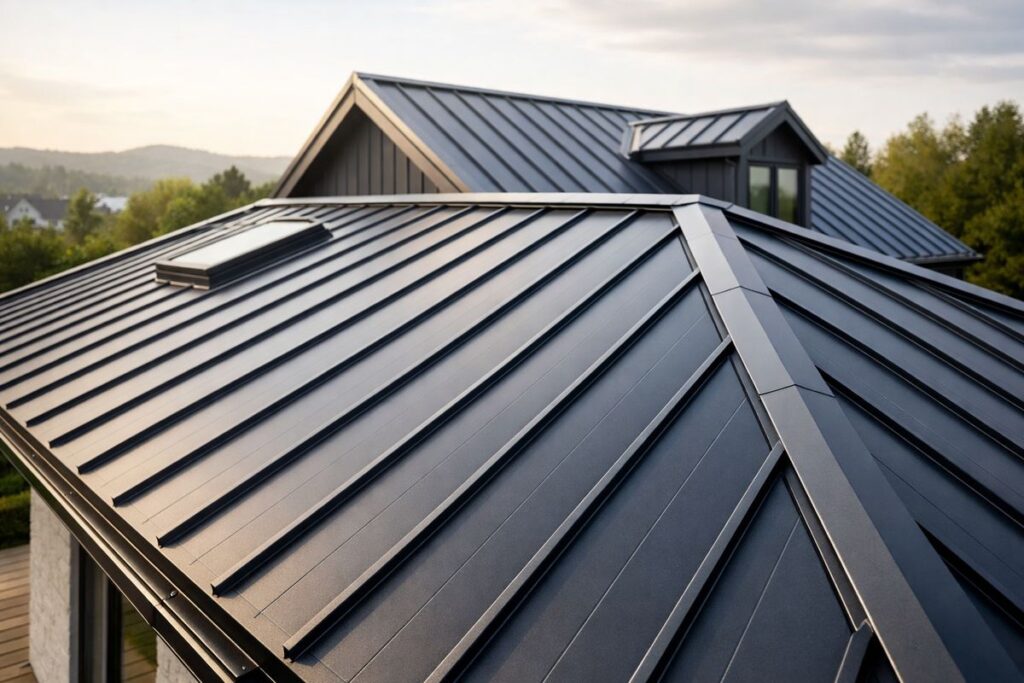
A standing seam metal roofing system is a metal roof made from long vertical panels joined by raised seams, with the fasteners hidden underneath instead of exposed on the surface. That sounds like a small detail, but it changes everything: how well your roof handles Florida rain, how long it lasts, and how often you end up worrying about the next leak after a hard storm.
What Standing Seam Metal Roofing Is
Standing seam metal roofing is a premium roofing system built from metal panels that run from the ridge down to the eave. Each panel connects to the next at a raised joint, and those joints sit above the flat portion of the roof. The screws and clips that hold the system in place are tucked beneath the panels or seams, so the weather-facing surface stays cleaner and less vulnerable.
That hidden-fastener design is the whole point. On simpler metal roofs, screws go right through the face of the panel, which means every fastener is one more spot exposed to sun, rain, movement, and wear. With standing seam, the system is designed to protect those connection points instead of daring the weather to test them.
How it looks on your roof
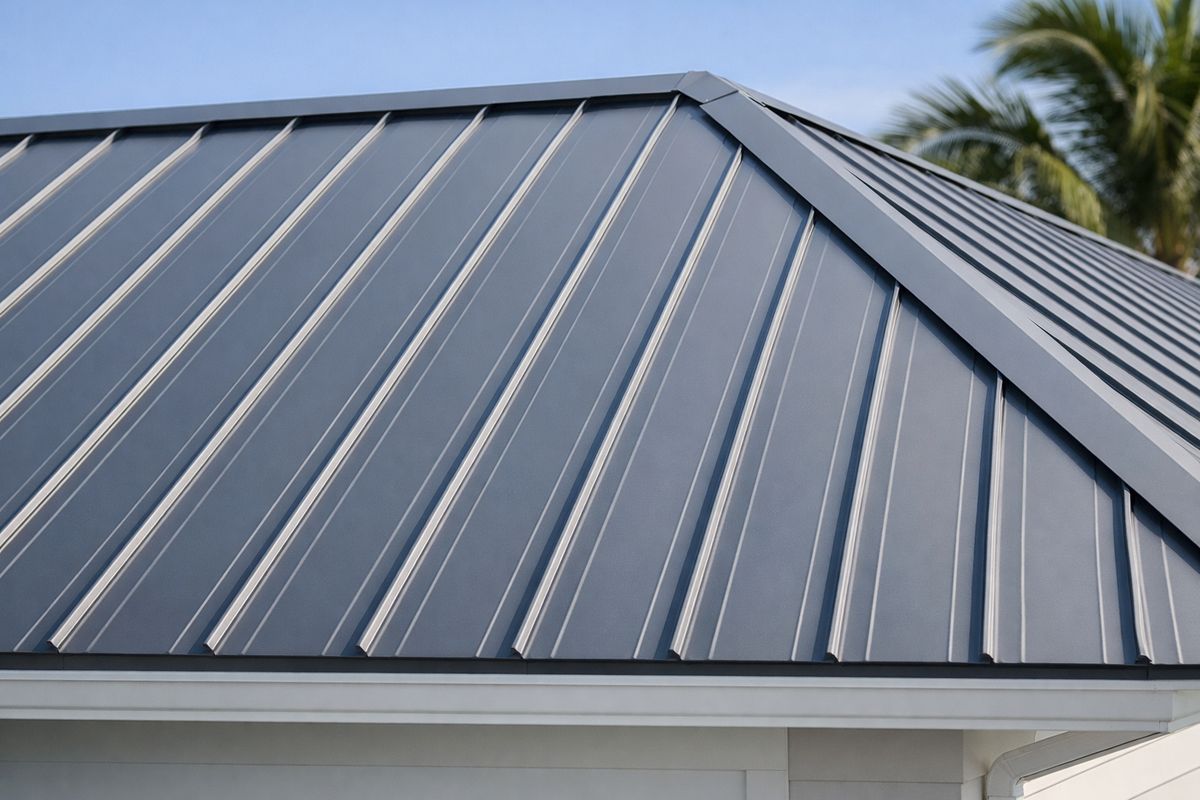
Picture long, crisp lines running straight down your roof. Instead of the layered, textured look of asphalt shingles, standing seam looks smooth and orderly. The seams rise up between panels, so you see narrow ridges spaced evenly across the roof.
It has a clean look, but not always a modern-only look. Depending on color, panel width, and trim details, it can feel sharp and contemporary, or quiet enough to work on a more traditional home in Bradenton or Manatee County.
Why the name “standing seam” matters
The name is actually pretty literal. “Standing” refers to the seams standing above the flat panel area. “Seam” refers to the place where two panels join together.
That matters because the raised joint is not just there for looks. By lifting the connection point above the main water-shedding surface, the roof does a better job keeping water away from vulnerable areas. The design itself is doing part of the work.
Why Standing Seam Metal Roofing Works Better Than Basic Metal Roofing
Standing seam is not just metal roofing. It is a smarter system.
The reason is simple: most roofs fail at their weak points, not in the middle of a perfectly good panel. Leaks usually start around screws, seams, flashing details, penetrations, and spots where movement stresses the material over time. Standing seam was built to reduce those weak points instead of multiplying them.
Concealed fasteners mean fewer leak points
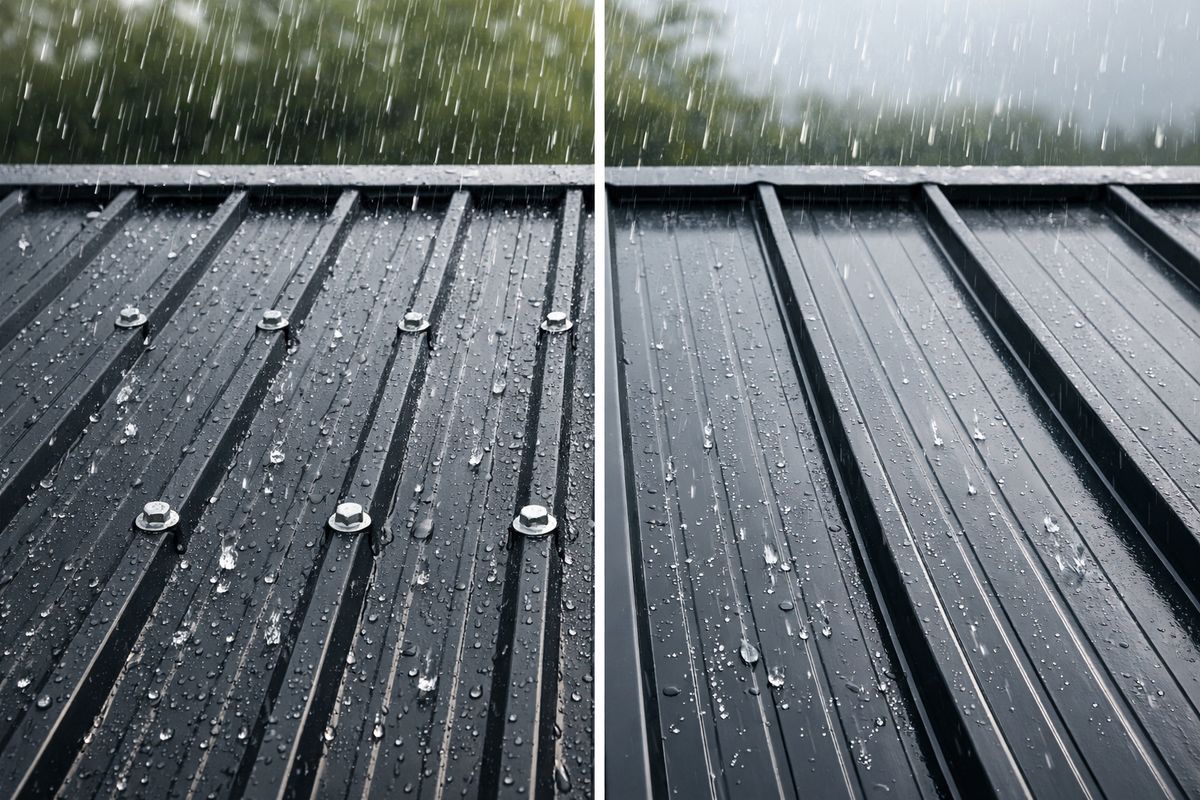
On an exposed-fastener roof, you can actually see rows of screws across the face of the panels. Every screw needs a washer, every washer ages, and every penetration gives water one more place to try. Sun, heat, and repeated movement can slowly loosen or wear those connections.
Standing seam keeps those fasteners concealed. That means fewer holes directly exposed to the weather, which usually means fewer opportunities for leaks. It is one of the biggest reasons this system tends to outperform basic screw-down metal roofing over the long run.
Raised seams help shed water
Florida rain is not gentle. When a summer storm blows through sideways, water gets pushed hard across the roof surface. Raised seams help by keeping the panel joints elevated above the main drainage path.
Think of it like lifting the zipper of a rain jacket out of the splash zone. Water still moves across the surface, but the vulnerable connection is no longer sitting right in the path of every sheet of runoff. That is especially helpful in heavy rain and wind-driven weather.
Clip systems allow thermal movement
Metal moves. That is not a flaw, just physics. In plain English, thermal movement means the metal expands when it gets hot and contracts when it cools down.
Better standing seam systems account for that with clips that hold the panels in place while still allowing a bit of movement. That keeps the roof from fighting against itself during hot afternoons and cooler nights. It also helps reduce stress around fasteners and joints, which is one reason standing seam roofs can last 40 to 70 years when installed properly.
The Main Parts of a Standing Seam Roof
If you are comparing estimates, it helps to know what you are actually paying for. A standing seam roof is not just “metal panels.” It is a system, and the supporting pieces matter almost as much as the panels themselves.
Panels
The panels are the large visible sections of the roof. They come in different widths, thicknesses, and seam heights. Wider is not always better, and neither is taller by default. The right panel depends on roof shape, slope, wind demands, and the look you want.
A taller seam can improve weather performance in some applications, especially where water control matters more. Panel sizing also affects how the roof handles movement and appearance. Good design is less about picking the fanciest profile and more about matching the system to the house.
Seams and locks
Not all seams connect the same way. Some standing seam panels snap together. Others are mechanically seamed, which means the panels are folded or crimped together after placement.
Both are legitimate systems. The difference is how tightly the panels lock and what conditions the roof is expected to handle. On the surface, two roofs may look similar. Up close, the connection method can tell you a lot about performance.
Clips, underlayment, and trim
Clips are the hidden hardware pieces that hold panels to the roof deck or structure. In many systems, those clips let the metal move slightly as temperatures change. That is a big part of why standing seam holds up well over time.
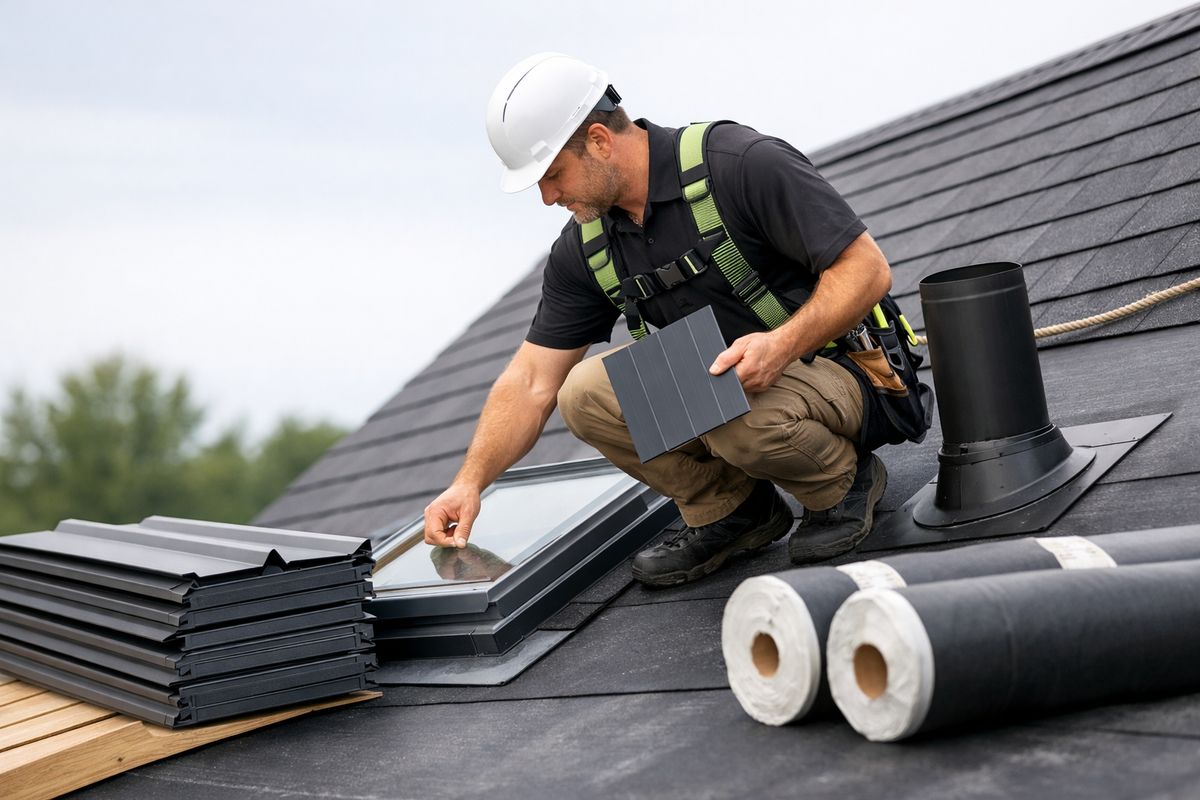
Underlayment sits beneath the metal and acts as a backup layer of protection. Then there is trim and flashing around edges, valleys, skylights, vents, chimneys, and transitions. Here’s the thing: those areas are where a good roof proves itself. A beautiful panel means very little if the edge metal and flashing details are sloppy.
Types of Standing Seam Metal Roofing You’ll Run Into
If you start getting estimates, you will hear profile names pretty quickly. That can get confusing fast, because a lot of products are sold under the broad label of standing seam even when the details are very different.
Snap-lock standing seam
Snap-lock standing seam panels are designed to click together without mechanical crimping. That often makes installation faster, which can help on residential jobs where speed and cost both matter.
For many homes, this is a solid fit. It offers the clean standing seam look and the main benefit of concealed fasteners, while usually being less labor-heavy than mechanically seamed systems.
Mechanically seamed standing seam
Mechanically seamed panels are folded or crimped together with a seaming tool after installation. The connection is tighter and more secure, which is why this type is often chosen for lower-slope roofs or tougher weather exposure.
It is more labor-intensive, but that extra work can buy added performance. If your roof design is complex or your priorities lean hard toward maximum weather resistance, this option deserves serious attention.
Batten-style and nail-flange variations
Batten-style systems create a more pronounced rib or cap over the joint. Nail-flange or fastener-flange panels usually attach more directly, often with fewer components, and can be quicker to install.
The catch is that not every product with a standing seam look performs like a high-end clip-fastened system. Some profiles are more appearance-driven than performance-driven. That brochure photo with clean lines does not tell you how the roof is actually attached, and that detail matters more than the color sample.
Why Homeowners Choose Standing Seam in Places Like Bradenton
A roof decision gets real fast when you notice a brown water stain spreading across the ceiling after a 3 a.m. summer storm in Bradenton. At that point, you are not shopping for abstract features. You are trying to stop the cycle of leaks, patches, stress, and insurance paperwork.
That is where standing seam gets a lot of attention. In places like Bradenton and Manatee County, roofs deal with heat that bakes materials for months, wind that tests edges and flashings, heavy rain that finds weak details, and salt air that punishes lower-quality finishes. A roof system that is built to manage movement and keep fasteners out of the weather starts to make a lot of sense.
Storm and wind performance
Properly installed metal roofs can withstand wind gusts up to 140 mph, but the phrase “properly installed” is doing a lot of work there. Panel type, fastening pattern, substrate, trim details, and local code requirements all matter.
Standing seam has a strong reputation in windy conditions because the system is engineered around interlocking panels and concealed attachments. But a great product installed badly is still a bad roof. That is worth repeating.
Heat, sun, and energy savings
Florida roofs spend a lot of time getting roasted. Reflective finishes on metal roofing can bounce more solar heat away than darker, heat-absorbing surfaces. That can help lower attic temperatures and reduce cooling demand during long hot seasons.
Real-world savings vary, but metal roofs can cut energy costs by 10% to 25%, and reflective coatings can push savings higher in some cases. Not every home will see dramatic utility bill changes, though honestly, even a modest reduction feels pretty good during an August cooling bill.
Longevity when you plan to stay put
Standing seam usually costs more at the start, but it often makes the most sense when you plan to stay in your home for years. Instead of thinking only about the install price, think about how many times you want to deal with roof replacement.
If you would rather put in one strong roof and be done with it for decades, standing seam earns its premium. It is a long-game roof.
Pros of Standing Seam Metal Roofing
The benefits are pretty straightforward. You pay more upfront for a system designed to last longer, leak less often, and perform better under stress.
Long lifespan and lower maintenance
One of the biggest selling points is lifespan. Metal roofs commonly last decades, and standing seam usually outlasts simpler screw-down systems because the panels are allowed to move without tearing up their own connection points. Some sources put standing seam service life at 40 to 70 years.
That changes the value equation. Fewer replacements over time can matter more than a lower upfront price, especially if your current roof is already on its second round of repairs.
Clean appearance and design flexibility
Standing seam has a neat, intentional look. The lines are uniform, the surface is uncluttered, and the color options are better than a lot of people expect.
That does not mean every house needs it. But it can work on coastal homes, farmhouse-inspired homes, contemporary designs, and plenty of ordinary Florida houses that just need a roof upgrade without looking flashy.
Better fit for solar, snow guards, and accessories
One practical advantage gets overlooked a lot: standing seams can support clamp-on accessories in many systems. That means solar mounting, and some other add-ons, can sometimes be attached without drilling through the panel surface.
If solar is even a maybe for your future, that is worth noticing. Many standing seam systems are considered a strong fit for solar for exactly that reason.
The Tradeoffs You Should Know Before You Commit
Standing seam is excellent, but it is not magic. You should know the downsides before signing anything.
Higher upfront cost
This is a premium system, and the price reflects that. Standing seam metal roofing often runs about $10 to $16 per square foot, depending on material, profile, roof complexity, tear-off needs, trim, and local labor rates.
A lot of that bill is labor. Installation can account for 60% to 70% of the total project cost, which makes sense once you realize how much precision goes into panel layout, fastening, trimming, and flashing.
Installation quality matters a lot
A great material installed badly is still a bad roof. Standing seam is less forgiving than shingles, and less forgiving than simpler exposed-fastener metal systems too.
Panel alignment, clip spacing, underlayment choices, flashing details, and seaming quality all affect performance. If those details are off, your premium roof can turn into a premium headache.
Repairs can be more specialized
Repairs are possible, but not always simple. Replacing a damaged panel, tracing a leak around a penetration, or correcting bad trim work often takes more specialized skill than patching shingles.
That is one reason it helps to work with a contractor who regularly installs and services metal roofs, not one who occasionally takes a metal job when the schedule is slow.
Standing Seam vs. Other Roofing Options
If you are deciding between repair and replacement, or comparing materials during an insurance claim, context helps.
Standing seam vs. asphalt shingles
Asphalt shingles cost less upfront and are familiar to almost every roofing crew. They are easier to patch, easier to replace, and often a perfectly reasonable choice for shorter-term ownership.
Standing seam usually wins on lifespan, maintenance, wind performance, and long-term durability. If your shingle roof is aging out and you are tired of repeating the same cycle every 15 to 20 years, this is the upgrade path.
Standing seam vs. exposed-fastener metal roofing
Exposed-fastener metal roofing is usually cheaper. That is the attraction. But visible screws mean visible maintenance points, and those fasteners can loosen, back out, or wear around the washer over time.
Standing seam costs more because it solves that problem more intelligently. Hidden fasteners and movement-friendly clips are not just nice features. They are the reason the roof tends to age better.
Standing seam vs. stone-coated metal
Stone-coated metal gives you a more traditional shingle, shake, or tile appearance while still using metal as the base material. Standing seam gives you cleaner vertical lines and a more architectural panel look.
Neither is automatically better. If your priority is a sleek panel roof, standing seam is the obvious choice. If you want metal performance with a more traditional appearance, stone-coated products may fit better.
Is Standing Seam the Right Choice for Your Roof?
This is where the decision gets practical. The best roof for your home depends on what is wrong with the current one, how long you plan to stay, and how tired you are of temporary fixes.
It makes sense when replacement is the smarter move
If your roof has repeated leaks, widespread wear, storm damage in multiple areas, or is already near the end of its expected life, more patching may just be delaying the real decision. Insurance carriers also do not always love endless partial repairs on an aging roof.
That is often the point where upgrading to a longer-lasting system makes more sense than funding another short-term fix.
It may be worth a closer look after storm damage
After wind or hail, the question is not only “can this be repaired?” It is also “will this repair leave you chasing the next leak in six months?”
Standing seam is worth a look if you want more resilience going forward, especially after storm damage exposes the weak points of your current roof. If you are comparing options locally, a contractor that handles metal roofs in Bradenton can help you sort out what is repairable and what is just buying time.
It may not be the best fit for every home
If budget is tight, if you expect to move soon, or if your roof design is unusually complex in a way that pushes labor costs way up, another option may fit better. Some neighborhoods also lean strongly toward certain appearances, and not every homeowner wants the standing seam look.
That is fine. A smart roof choice is not about chasing the fanciest material. It is about matching the system to your house, your plans, and your tolerance for future repairs.
Common Questions About Standing Seam Metal Roofing
Is a standing seam roof noisy in the rain?
Usually not in the way people imagine. On a home with solid decking, proper underlayment, and decent attic insulation, rain sounds more muted than the old barn-roof stereotype suggests. You may notice a different tone during a heavy downpour, but not a drum solo overhead.
Can it rust?
Metal roofs are made with protective coatings and finishes that help resist corrosion. Material choice matters too. Steel, aluminum, and coating quality all affect performance, especially near the coast where salt air is part of daily life. A well-made, well-installed roof resists rust very well, but neglected damage and poor-quality finishes can still create problems.
Will it dent from hail or debris?
It can. That is the honest answer. Denting depends on panel thickness, profile shape, impact size, and where the hit lands. Some damage is cosmetic, meaning the roof still functions. Other damage affects seams, flashing, or protective coatings and deserves closer attention. Larger hailstones hit much harder, and research shows larger hail diameter sharply increases panel displacement.
How much does it cost?
Standing seam usually falls in the premium range. A common ballpark is $10 to $16 per square foot, but the final number depends on roof size, complexity, panel type, metal thickness, tear-off, trim details, and labor. A simple roof with easy access costs less than a chopped-up roof with valleys, dormers, skylights, and tricky transitions.
Can you install it over an old roof?
Sometimes, yes. Some retrofit or overlay approaches are possible, but not every home qualifies. Structure, moisture conditions, code rules, ventilation, and the condition of the existing roof all need to be checked first. Saving tear-off costs sounds great, but trapping problems underneath a new roof is never a win.
What to Ask Before You Sign a Roofing Contract
A standing seam roof can look fantastic on day one and still fail early if the details are wrong. Before signing, get specific.
Ask about panel type, fastening method, and underlayment
Do not settle for “standing seam” as a vague label. Ask what panel profile is being installed, whether it is snap-lock or mechanically seamed, how it is fastened, and what underlayment goes below it. Those details affect cost, lifespan, and weather performance.
Ask how flashing and penetrations will be handled
Chimneys, vents, skylights, valleys, wall transitions, and roof edges are where the trickiest leak problems usually start. Ask exactly how those areas will be flashed and finished. If the answer sounds rushed or fuzzy, pay attention.
Ask for local project examples and inspection support
In Bradenton and Manatee County, local experience matters. Storm exposure, permit requirements, inspection expectations, and insurance documentation are not side issues. Ask for nearby project examples and ask how permit and inspection steps will be handled.
Try one simple thing this week: pull out your last roof inspection report or insurance paperwork, circle every note about leaks, storm damage, or age, and turn those into a short question list before your next estimate.
Frequently Asked Questions
How long does a standing seam metal roof usually last?
In many cases, 40 to 70 years. Actual lifespan depends on material type, coastal exposure, panel thickness, finish quality, and installation details.
Is standing seam better than a regular metal roof?
Usually yes, if by “regular” you mean exposed-fastener metal roofing. The hidden-fastener design and movement-friendly clips tend to reduce leak points and long-term stress.
Does standing seam metal roofing help with insurance?
It can, especially if your current roof has storm damage or age-related issues that make repair less practical. Insurance rules vary, so the value often comes from better long-term durability and clearer replacement logic after repeated damage.
Can a standing seam roof work on any roof shape?
Not every shape is ideal. It works best on roof designs that allow clean panel runs and solid flashing details. Very complex roofs can still be done, but cost and labor usually go up.
Is standing seam worth the extra cost?
If you plan to stay in your home, want fewer replacement cycles, and care about storm performance, yes, it often is. If you need the lowest upfront price or expect to sell soon, the math may point somewhere else.