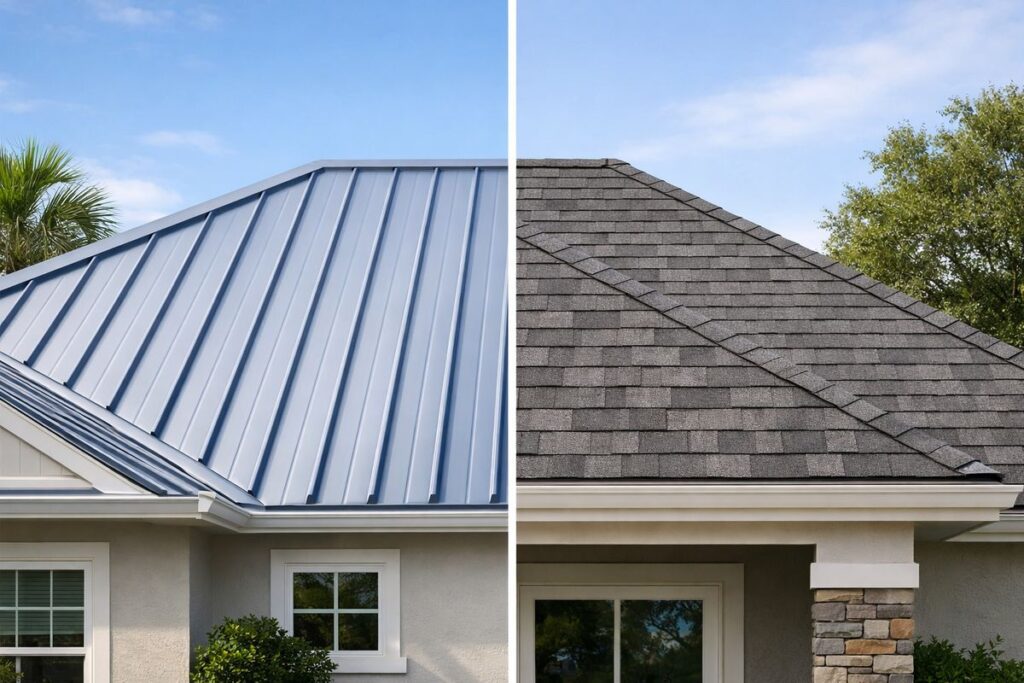
If your roof is leaking after a hard Bradenton afternoon storm, the metal roof vs shingles decision gets real fast. One option usually saves you money today, the other often saves you money, stress, and repeat roof work later. Here’s the plain-English version of what you actually gain with each.
Quick Overview: Metal Roof vs. Shingles in Bradenton
For most Bradenton homeowners, metal is the better long-term roof. Shingles win on upfront price, but metal usually gives you more years, better storm performance, and fewer headaches in a place where sun, salt air, heavy rain, and hurricane-season wind all take turns testing your roof.
That doesn’t make shingles a bad choice. If your priority is a practical replacement right now, especially after a leak or insurance issue, asphalt shingles still make sense. They’re familiar, widely available, and faster for many crews to install.
But if your current roof is aging out and you want the last replacement for a very long time, metal deserves a hard look. That’s especially true if insurance conversations, recurring repairs, or coastal wear are already part of your life.
Upfront Cost
This is where shingles grab attention first. On paper, asphalt usually costs far less than metal, and that gap can be big enough to shape the whole decision.
Typical installed pricing runs around $1.50 to $6.00 per square foot for asphalt shingles, while metal can range from about $4 to $30 per square foot depending on the material and system. On a Bradenton-area home, that can mean the difference between a manageable replacement bill and a number that makes you stare at the quote twice.
What You Usually Pay for Shingles
Shingles are the budget-friendly option because the material itself costs less and the install is more common. More crews work with shingles every day, which usually keeps labor simpler and pricing more competitive.
That matters when you need a fast roof swap after storm damage or when your current roof has reached the point where patching stops being worth it. If the main goal is getting your home dry, protected, and insurable again without stretching the budget too far, shingles do that well.
What You Usually Pay for Metal
Metal costs more because the materials are more expensive and the labor takes more skill. A standing seam system, for example, is not just “metal panels.” It’s a precision roof system with seams, clips, flashing details, and trim work that all need to line up and stay watertight through years of Florida weather.
Stone-coated steel can push the number even higher. Some estimates put an average asphalt roof around $15,000 to $20,000, while stone-coated steel can land around $30,000 to $50,000. The catch is that the higher price is buying more than appearance. It’s buying durability and service life too.
Hidden Costs That Change the Estimate
Two quotes that look like they’re for the same roof can come back thousands apart. Usually, the difference is buried in the details.
Rotten decking is a big one. If water has gotten under the old roof, replacing damaged wood can add roughly $2 to $5 per square foot. Underlayment matters too, especially in Florida where water-shedding layers and peel-and-stick protection make a real difference. Permits can add another $250 to $500. Then there’s flashing, drip edge, vent work, trim details, and roof complexity. A simple gable roof is one thing. A cut-up roof with valleys, dormers, and lots of transitions is another.
Lifespan and Long-Term Value
Here’s the thing: shingles are cheaper to buy, but metal often costs less across the years. If you plan to stay in your home, that changes everything.
How Long Shingles Usually Last in Florida Conditions
Asphalt shingles are often marketed with long lifespan claims, but Florida has a way of shortening advertised timelines. Heat cooks the roof every summer, humidity lingers, storms hit hard, and salt in the air doesn’t do any favors near the coast.
A shingle roof may be rated for 20 to 30 years, but real-world performance can land closer to 15 to 25 years in rougher conditions. That doesn’t mean every shingle roof fails early. It means the environment in Bradenton is not gentle, and your roof ages accordingly.
How Long a Metal Roof Can Last
Metal usually changes the math because it lasts much longer. A well-installed metal roof commonly runs 40 to 80 years, and 40 to 50+ years is a very normal expectation.
That longer lifespan is the real selling point. Instead of budgeting for another major replacement much sooner, you’re paying once for a roof system built to stay put for decades.
Cost Over 20, 30, and 40 Years
Over 20 years, shingles often still look appealing because the lower upfront cost carries a lot of weight. Over 30 years, the comparison tightens. Over 40 years, metal often pulls ahead because there’s a good chance a shingle roof has already needed replacement once, or is heading there.
That means another tear-off, another permit, another round of labor, and another period of disruption at your house. It’s a little like buying the cheaper grill every few years instead of getting the one that survives every summer on the patio. The first option feels easier. The second usually costs less over time.
Storm Resistance and Florida Weather
Bradenton roofs don’t live easy lives. One rough storm can expose every weak spot, fast.
Wind Performance
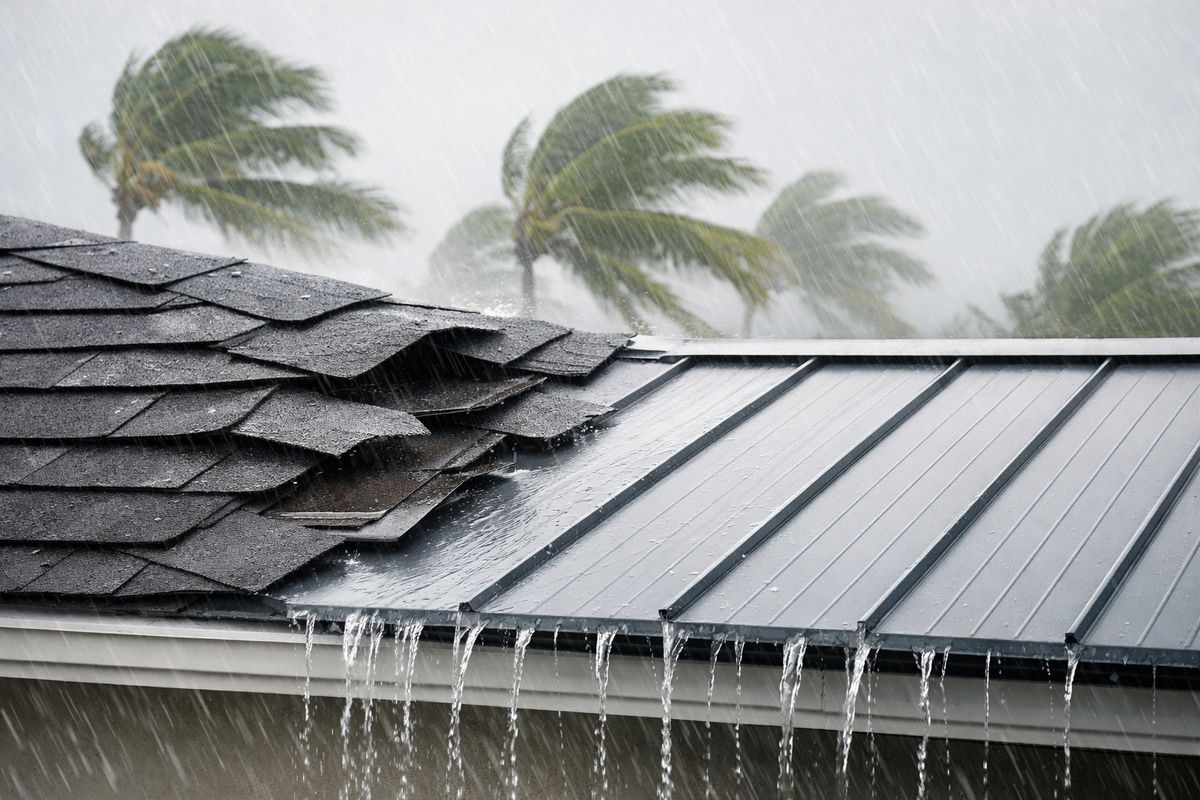
Properly installed metal roofs usually handle high wind better than shingles. Shingles can lift, crease, and tear off in sections. Once a few tabs go, the surrounding area gets more vulnerable.
Metal systems, especially higher-end options, tend to stay more intact under wind pressure. Some stone-coated steel products are rated up to 120 mph. Even better, Consumer Reports testing found metal shingles performed strongly in wind, seam strength, impact, and saltwater corrosion testing.
Rain, Leaks, and Water Shedding
Both roofs can protect your home well if the installation is solid. That part matters more than the sales pitch.
Leak risk usually comes down to the details: underlayment, flashing around penetrations, valley work, roof slope, and how carefully the roof was tied into edges and transitions. Metal often sheds water faster because of its panel design. Shingles rely on layered overlap and gravity. Both work. Bad flashing ruins both.
Hail and Impact Resistance
Hail damage looks different depending on the material. Shingles often lose granules, crack, bruise, or weaken in spots that are hard to notice from the ground. Metal can dent, but some products offer stronger impact resistance, including Class 4 options.
That matters because even hail-rated asphalt can still be damaged by larger stones. If your roof takes regular storm abuse, the stronger impact options in metal are worth paying attention to.
Salt Air and Coastal Wear
Closer to the coast, salt air changes the conversation. Corrosion protection suddenly matters a lot more.
Not all metal roofs are equal here. Coatings, paint systems, base metals, and fastener quality make a huge difference. A good coastal-rated metal system can hold up very well, but a poor product choice or sloppy installation can age badly. Shingles don’t rust, of course, but they still deal with heat, moisture, and wind wear. Near the Gulf, material selection is only half the battle. Installation quality decides the rest.
Energy Efficiency and Heat
If your upstairs rooms feel stuffy by 3 p.m. in August, your roof is part of that story.
How Metal Reflects Heat
Metal often performs better in hot climates because reflective finishes bounce more solar heat away from the roof surface. Some coatings are designed specifically for this, which is why metal is often pitched as a “cool roof” option.
That doesn’t mean every metal roof automatically turns your attic into a refrigerator. But it can reduce heat gain, especially with lighter colors and the right finish. If you’re comparing systems, it helps to look at how reflective finishes work and what kind of metal roof you’re actually being quoted.
How Shingle Color and Ventilation Affect Performance
Shingles are not automatically inefficient. A lighter shingle color, good attic ventilation, and proper insulation can make a big difference in how your home feels.
That’s the catch with roof comparisons. Material matters, but so does the whole roof assembly. Poor ventilation can make either roof perform worse. A darker roof can make either roof hotter. If your estimate ignores intake vents, exhaust vents, or attic airflow, it’s missing part of the picture.
What This Means for Summer Cooling Bills
In practical terms, metal can help lower cooling demand, especially during long Florida heat stretches. Metal roofs are more energy efficient largely because they reflect sunlight better than standard asphalt.
You’re most likely to notice that in the rooms that usually get hot first, bonus rooms, second floors, and spaces with weak attic airflow. The roof alone won’t fix a badly insulated house, but it can make summer feel less punishing.
Maintenance and Repair
The sale price is one thing. What happens after year eight, year twelve, or the next storm is the part that really tells the story.
Typical Maintenance for Shingles
Shingle roofs usually show wear in familiar ways: missing tabs, curling edges, granule loss, algae streaks, exposed nail heads, and small leak points around flashing or penetrations.
In Bradenton’s warm, wet climate, those issues tend to show up sooner than homeowners want. It’s not always dramatic. Sometimes it’s just a slow slide from “looks okay” to “needs more repairs than expected.”
Typical Maintenance for Metal
Metal generally needs less routine maintenance, but less does not mean none. Fasteners may need attention on some systems. Sealants can age. Coatings matter. Storm inspections still matter too.
If you’re comparing systems like exposed-fastener metal and a cleaner concealed-fastener option, the maintenance differences are worth understanding before you sign anything. Some metal roofs are designed to stay tighter and cleaner-looking over time, but only if installed correctly.
Which Roof Is Easier to Fix After Damage
Shingles are usually easier to repair because more contractors stock the materials and more crews handle that work regularly. Matching older shingles can still be tricky, especially if the original color has faded, but repairs are usually more straightforward.
Metal repairs can be more specialized. Matching panel profiles, finishes, and trim details takes more care. Repairs can also cost more. So while metal often needs fewer repairs, the fixes can be less simple when something does go wrong.
Insurance and Claims
In Florida, the roof conversation often turns into an insurance conversation whether you wanted that or not.
How Roof Age Affects Shingle Coverage
Older asphalt roofs can become a problem with some insurers. Coverage may depreciate after a certain age, and full replacement value can get harder to keep. Some reports note that asphalt roofs may be fully covered only for the first 10 years, after which payouts may be reduced.
That matters if you’re trying to decide between one more repair and a full replacement. A roof that technically still exists is not always a roof your insurer likes.
Why Metal May Help With Resilience and Insurance Conversations
Metal won’t guarantee lower premiums, but it can help in resilience conversations because it is longer-lasting and often more storm-resistant. Insurers tend to pay attention to claim risk, and roof materials that hold up better in wind and hail can work in your favor.
That’s especially true if your roof replacement is part of a bigger effort to make your home easier to insure and easier to keep insured.
What to Ask Before You File or Replace
Before you file a claim or approve a replacement, get the basics in writing. Confirm the roof age, document visible damage with photos, ask whether repairs are still viable, and check how your policy handles depreciation, deductibles, and code upgrades.
If a contractor is vague about what storm damage actually exists, slow down. If an insurer is pushing for patchwork on a roof near the end of its life, ask harder questions.
Curb Appeal, Style, and HOA Fit
A roof is a protection system, but it’s also a huge visual feature. You notice it every time you pull into the driveway.
The Familiar Look of Shingles
Shingles stay popular because they fit almost any house. Ranch, coastal, traditional, newer subdivision home, they rarely look out of place. They also come in enough colors and textures to blend in without causing neighborhood drama.
Sometimes that familiarity is the whole point. You want a roof that looks normal, works well, and doesn’t start a debate at the mailbox.
Modern Metal Styles for Residential Homes
Metal has moved well beyond the old barn-roof stereotype. Standing seam looks clean and modern. Metal shingles can look more traditional. Stone-coated steel can mimic shake, tile, or dimensional shingles while still giving you metal’s durability.
That’s one reason metal’s share of the residential market has climbed to about 15% of homes. More homeowners now see it as a residential product, not an industrial one.
HOA and Neighborhood Restrictions
Some HOAs are stricter than others about visible roofing materials, colors, and profiles. Shingles are almost always the easier approval. Metal may be allowed, but only in certain styles or colors.
Check before you fall in love with a sample board. That one step can save a lot of frustration.
Installation Complexity and Contractor Skill
A great material installed badly can fail like a cheap one. In Bradenton weather, workmanship is not a side note.
Why Shingles Are More Common to Install
Shingles are more common because the workflow is familiar and more contractors install them regularly. That can help with scheduling, price competition, and repair availability later.
It also means you’ll have more bids to compare. That’s useful, but it doesn’t mean every bid is good.
Why Metal Demands More Precision
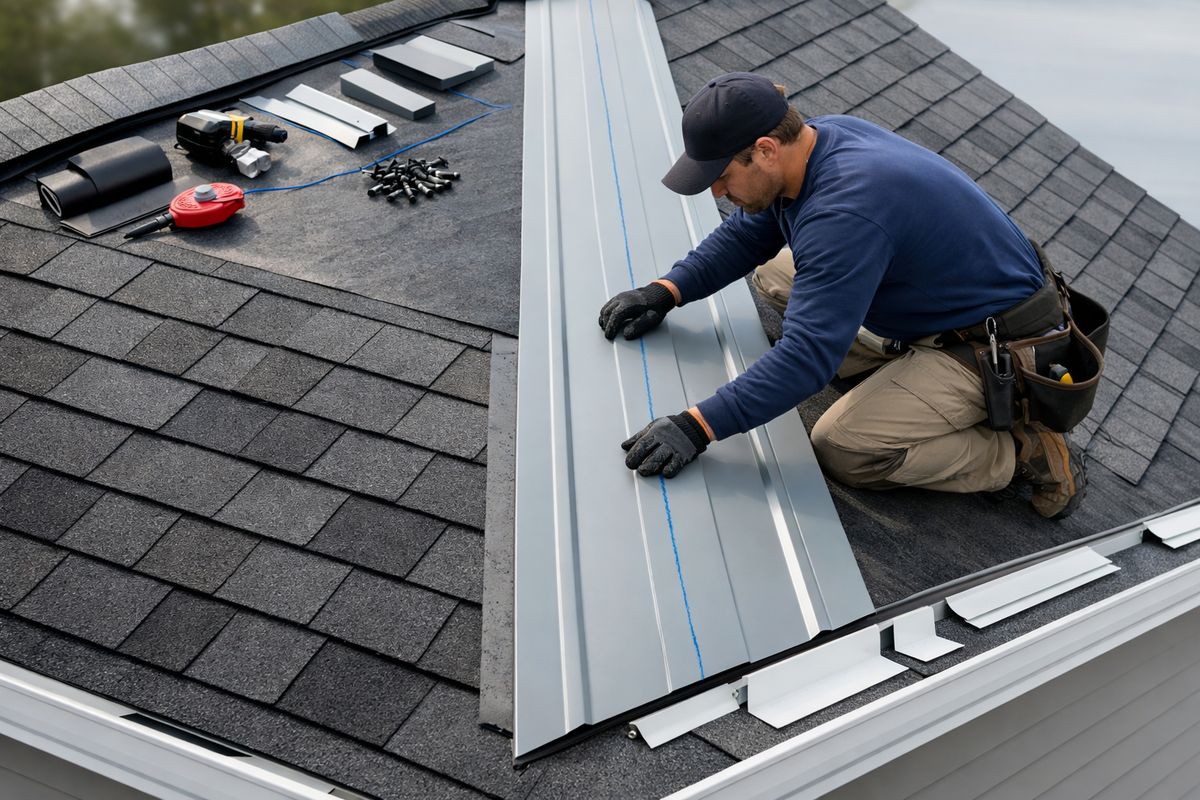
Metal demands cleaner layout, better flashing work, more exact fastening, and more careful trim details. Small mistakes can turn into big leak points. Panel alignment matters. Seams matter. Penetration details matter.
Labor is a huge part of the cost too, with some estimates putting labor at about 60% of a metal roof bill. That tells you something important: the installer matters almost as much as the product.
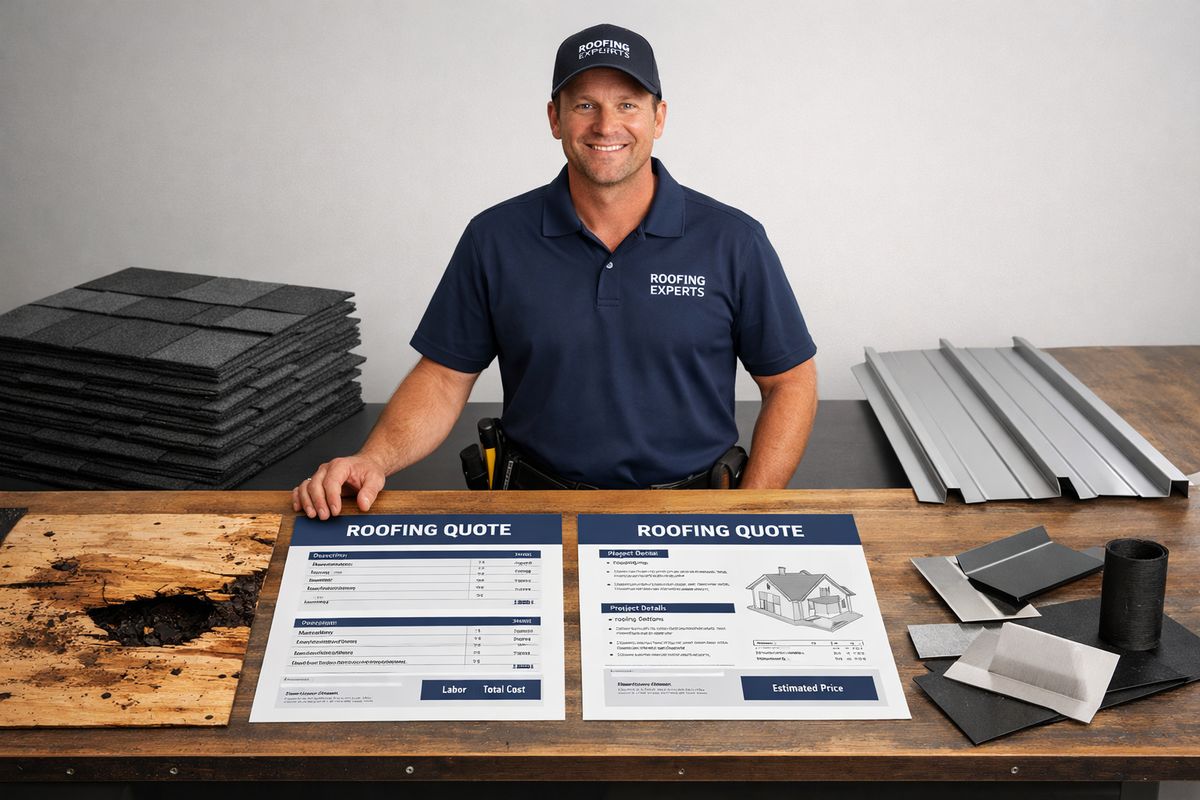
Red Flags to Watch in Any Roofing Quote
Watch for vague scopes, no permit allowance, no mention of decking replacement, weak warranty explanations, and missing ventilation details. If flashing is barely mentioned, that’s a problem. If the quote only names a material and a total price, that’s not enough.
A good roofing quote should read like a plan, not like a receipt.
Noise, Comfort, and Everyday Living
Plenty of homeowners worry that metal will sound like a drum solo every time it rains. That idea gets repeated a lot. It’s also oversimplified.
Is a Metal Roof Really Louder?
In most homes, proper underlayment, attic space, insulation, and installation details affect sound more than the roofing material alone. A properly installed metal roof over a standard residential attic usually does not create the dramatic noise people picture.
Yes, rain can sound different. But “different” is not the same as “too loud.” In many homes, the difference is modest.
Comfort During Heavy Summer Storms
For day-to-day comfort, both roofs can work well. The bigger comfort differences usually come from heat gain, leak resistance, and how secure the roof feels during nasty weather.
That last part matters more than people admit. A roof that inspires confidence during a rough summer storm is worth something, even if it doesn’t show up as a line item on a quote.
Environmental Impact and Resale Appeal
Green selling points are nice, but the practical part is easier to understand: how much waste gets created, and what a future buyer sees.
Waste and Replacements Over Time
Shingles often head to the landfill sooner because they need replacement sooner. Metal usually lasts longer and may include recycled content, and many systems are recyclable at the end of service life.
So the environmental case for metal is not just about materials. It’s about avoiding repeat tear-offs and repeat waste.
What Future Buyers May Notice
Future buyers often notice roof age fast because they know it can become an expensive problem. A newer shingle roof still adds value, of course, but a metal roof can stand out as a durability upgrade built for Florida weather.
Buyers also notice the timing. A roof with many years left feels easier to live with than one that may become a near-future project.
When Shingles Make More Sense
Shingles are not the runner-up choice. In plenty of situations, they’re the smart choice.
Best Fit for Lower Upfront Budgets
If the immediate goal is stopping leaks, restoring protection, and getting your home back in shape without stretching finances too far, shingles are often the right move. They do the job at a lower entry price, and that matters.
A perfect long-term plan doesn’t help much if the short-term number simply doesn’t work.
Best Fit for Shorter Ownership Plans
If you don’t expect to stay in the home long enough to enjoy metal’s longer payoff, shingles can be the better value. Paying more for decades of service only makes sense if you’re likely to use those decades.
That’s why shingles often fit homes expected to sell within the next several years.
Best Fit for HOA Simplicity or Traditional Appearance
If your neighborhood leans conventional or the HOA approval path looks easiest with asphalt, shingles can save you hassle. Sometimes the simpler path is the right one, especially when your roof already needs attention now.
When a Metal Roof Makes More Sense
This is where metal really pulls ahead for Bradenton homes.
Best Fit for Long-Term Homeowners
If you want one roof that can stay put for decades, metal starts making more sense fast. The higher upfront cost spreads out over a much longer useful life, and that changes the value equation in your favor.
Instead of thinking only about the next payment, you’re thinking about the next 30 to 50 years.
Best Fit for Storm Exposure and Coastal Conditions
Homes that take the brunt of sun, wind, salt air, and heavy rain often gain more from metal’s resilience. Stronger weather performance is not just a nice feature here. It’s part of the roof’s job description.
That’s especially true in exposed areas where every summer seems to include at least one storm that makes you stare at the ceiling and listen.
Best Fit for Energy Savings and Fewer Future Replacements
If you want fewer roofing disruptions, fewer replacement cycles, and a roof that can help with heat control, metal is usually worth the extra money. It’s the premium option, but in Gulf Coast conditions, premium often means practical.
Verdict: Which Roof Gives Bradenton Homeowners More?
Metal usually gives Bradenton homeowners more. More durability, more storm protection, more lifespan, and more long-term value. Shingles still win on upfront affordability, and for some budgets that alone makes the decision.
But if you can afford the higher initial cost, metal is usually the smarter roof for this climate. Try one thing this week: get two side-by-side estimates and make sure both include decking, permit costs, ventilation details, flashing scope, and insurance questions in writing.
Frequently Asked Questions
Is a metal roof worth the extra cost in Bradenton?
Usually, yes, if you plan to stay in your home for years. Bradenton’s heat, storm exposure, and coastal conditions make metal’s longer lifespan and stronger weather performance more valuable than in milder climates.
Do shingles work well enough in Florida?
Yes, if installed well and maintained properly. Shingles remain a solid choice for lower upfront budgets, shorter ownership timelines, and homes where HOA rules or appearance preferences lean traditional.
Can a metal roof lower your insurance premium?
Sometimes, but not always. Some insurers like the resilience of metal, especially in hail- and wind-prone areas, but discounts vary by carrier, policy, roof system, and home location.
Will a metal roof make your house louder in the rain?
Not necessarily. In most homes, underlayment, insulation, attic space, and installation details affect sound more than the roof material by itself.
Which roof is easier to repair after storm damage?
Shingles are usually easier and cheaper to repair because materials and crews are more widely available. Metal often needs fewer repairs over time, but fixes can be more specialized and more expensive when damage does happen.
Can an HOA stop you from installing a metal roof?
Yes, in some communities. Some HOAs allow metal only in specific colors or profiles, and some strongly prefer shingles. Approval should be checked before you commit to a material choice.