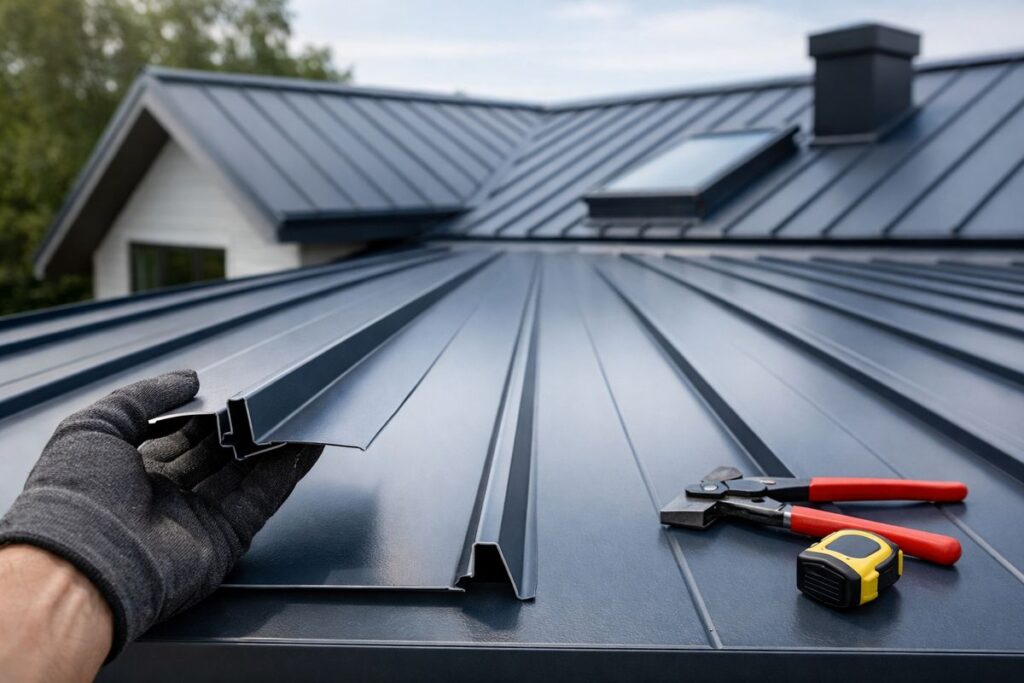
A standing seam roof is a metal roofing system made from long vertical panels that lock together with raised seams, and if you’re asking what is standing seam roof, you’re probably trying to figure out whether it’s just a style upgrade or a real fix for roof problems. The short answer: it’s one of the strongest, longest-lasting roofing options you can put on a home, especially when leaks, storm exposure, and repeat repairs are starting to wear you out.
What Is a Standing Seam Roof?
A standing seam roof is a type of metal roof with tall vertical panels that run from the top of the roof down toward the eaves. Where those panels meet, the edges fold or snap together into raised seams. The fasteners are hidden underneath instead of being driven through the face of the metal.
That design matters more than it sounds. Fewer exposed screws usually means fewer spots for water to work its way in over time. You also get a clean, modern look, but the real selling point is performance. This is roofing built to shed water fast and hold up for the long haul, not just look sharp from the street.
What “standing seam” actually refers to
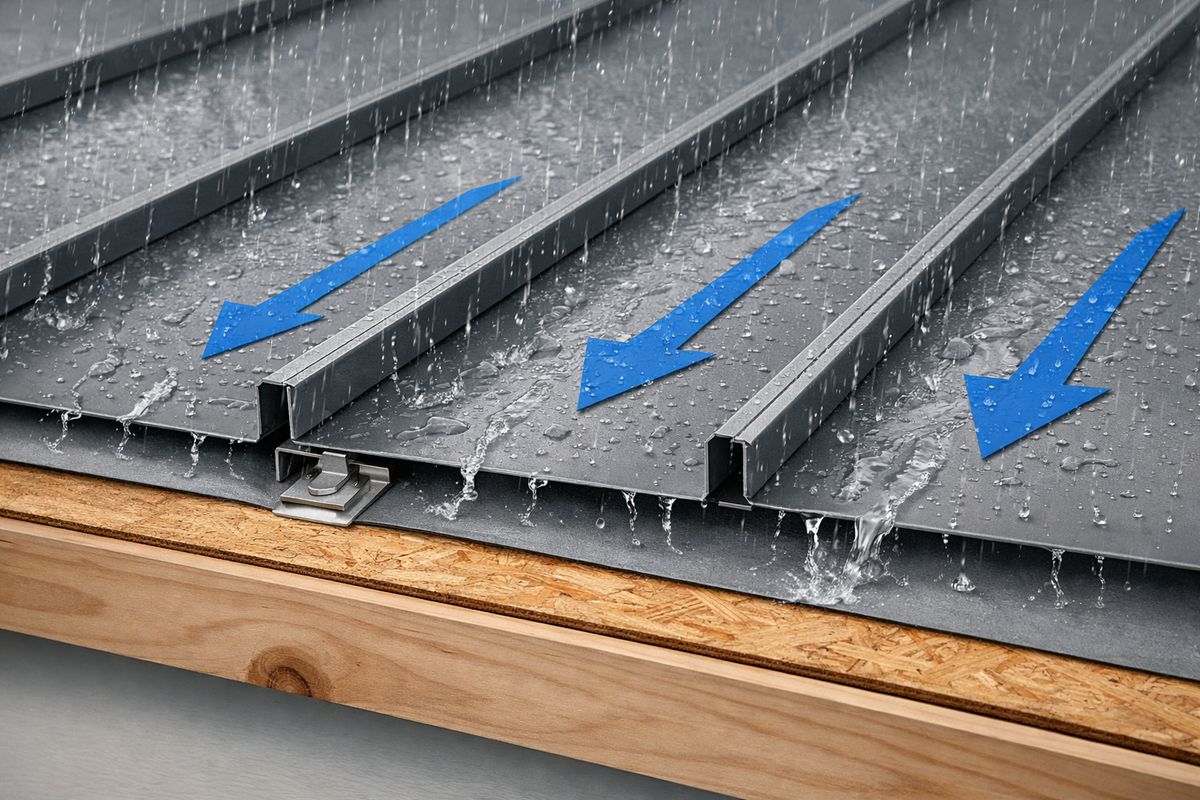
The “standing seam” is the raised rib where two metal panels connect. Picture two puzzle pieces meeting along an elevated line instead of lying flat. That seam stands above the broad flat part of the panel, which helps direct water down the roof instead of letting it collect around screw heads or low points.
That raised connection is the whole idea. Water runs off the panel surface while the joining point stays lifted above the main drainage path. Simple, but smart.
How it’s different from a regular metal roof
Here’s a common mix-up: not every metal roof is a standing seam roof. Some metal roofs use exposed fasteners, meaning you can actually see rows of screws on the face of each panel. Those systems can work fine, but the screws and washers take more weather abuse and usually need more attention as the roof ages.
Standing seam systems hide those attachment points. According to the concealed clips guidance used in building design, that approach helps minimize penetrations and allows the panels to move as temperatures change. That’s a big reason standing seam is considered the premium version of metal roofing.
How a Standing Seam Roof Works
Once you picture the parts, the system makes a lot more sense. Think of it like a series of long metal channels locked side by side, all designed to move water off your house while staying tight during heat, rain, and wind.
Panels, seams, and hidden clips
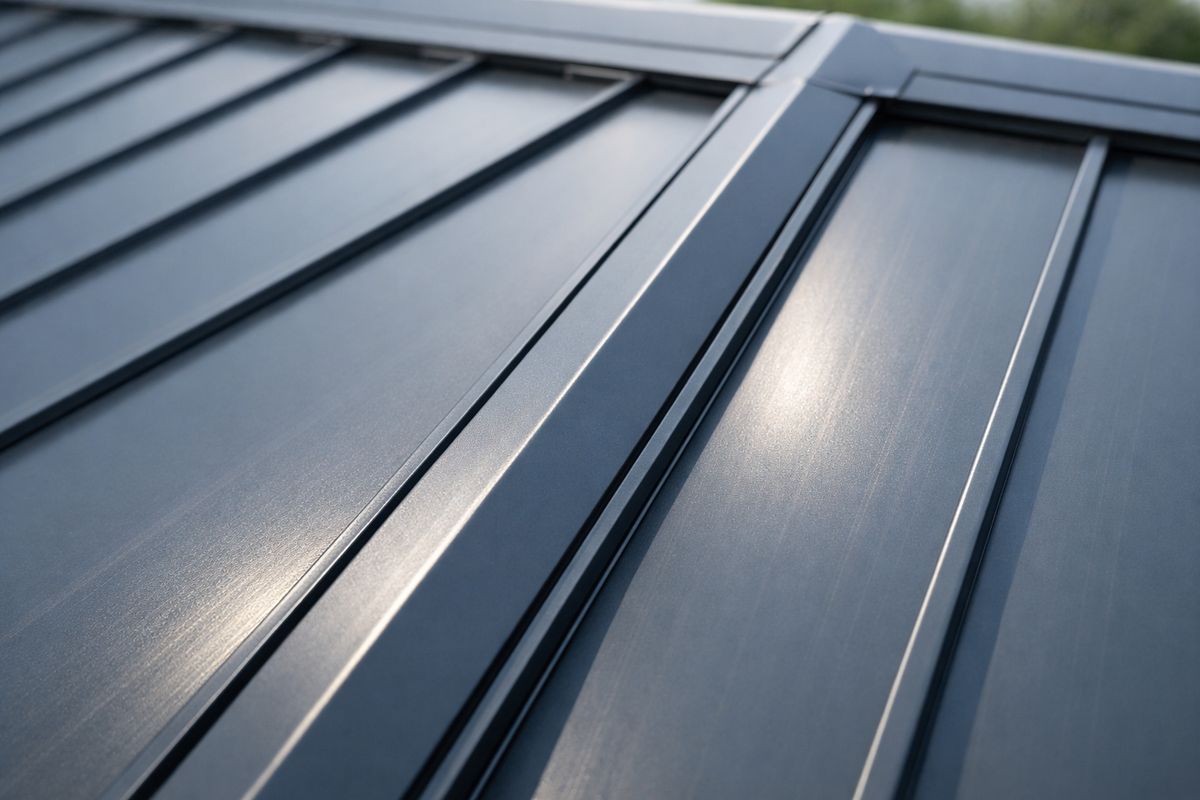
The roof uses long metal panels, usually installed vertically. Each panel connects to the next at the seam. Under those seams sit clips or concealed fasteners that anchor the roof to the structure below.
That hidden attachment system is a big deal. A roof with fewer surface penetrations usually has fewer potential leak points. It also creates a cleaner finished look because you don’t see hardware all over the roof face. If you want a little more detail on how the system comes together, this guide on how these metal panel systems work breaks that down further.
Why expansion and contraction matter in Florida heat
Metal moves. On a sunny August afternoon in Bradenton, your roof can get brutally hot, and when metal heats up, it expands. At night or after a summer storm rolls through, it cools and contracts.
A good standing seam system is built to handle that movement. Instead of pinning the panels down too tightly, the clips and seam design let the metal shift where it needs to without tearing itself apart over time. That sounds technical, but the idea is pretty ordinary: if you’ve ever seen a tight jar lid loosen after warm water hits it, you already understand that heat changes materials. Roofs deal with that same basic reality every day.
Common standing seam profile types
You’ll usually hear about three main profile types on estimates: snap-lock, mechanically seamed, and batten panel.
Snap-lock panels click together and are often used on residential roofs with steeper slopes. Mechanically seamed panels are folded together, sometimes with special equipment, and are often chosen when extra watertight performance matters. Batten panel systems use a raised cap over the panel joints for a more distinct look.
For your decision, the profile affects performance, installation method, and cost more than curb appeal alone. Two roofs can look pretty similar from the driveway and perform very differently once heavy rain shows up sideways.
Why Homeowners Choose Standing Seam Roofing
Standing seam roofs have a reputation for a reason. You pay more up front, but you get a roof built to outlast the patch-and-repeat cycle that frustrates so many homeowners.
Durability and lifespan
This is the biggest reason people choose it. Metal roofing often lasts 40 to 80 years, while asphalt shingles usually land much lower. That doesn’t mean every metal roof lasts forever, but standing seam is absolutely a long-term roofing system, not a temporary fix dressed up as an upgrade.
If your current roof keeps aging out faster than expected, that matters. Replacing shingles once is annoying. Doing it again while also chasing leaks is worse.
Better weather resistance
In Manatee County, storm season is not an abstract idea. It’s wind-driven rain, missing shingles after a bad night, and that uneasy walk around the house the next morning.
Standing seam roofs are popular because the design naturally helps with weather resistance. Hidden fasteners mean fewer exposed failure points. Raised seams help move water down and off the roof. And metal roofing is widely known for standing up well to wind, rain, and rougher weather than many cheaper materials.
Energy efficiency and cooler performance
If your house feels like an oven by late afternoon, roofing choice matters more than most people realize. Metal roofs can reflect 40% to 70% of solar heat, while dark asphalt shingles reflect far less. The U.S. Department of Energy also notes that reflective roofs can stay significantly cooler in direct sun.
Color, coating, attic insulation, and ventilation all affect the result. The catch is that the roof alone doesn’t do all the work. But if summer heat is punishing your home, standing seam is one of the strongest options available.
Low-maintenance appeal
Low maintenance does not mean no maintenance. But it does mean you won’t have rows of exposed screws and washers aging in the sun year after year.
That matters near the coast, where heat, salt air, debris, and storm cleanup all add stress to a roof. You still need inspections, especially after severe weather, but the maintenance burden is usually lighter than with systems that have more exposed attachment points.
The Trade-Offs to Know Before You Commit
Standing seam roofing is excellent, but it isn’t magic. There are real trade-offs, and you’re better off knowing them before you fall in love with the look.
Higher upfront cost
Standing seam usually costs more than shingles and more than basic exposed-fastener metal roofing. A common installed range is about $10 to $17.05 per square foot, depending on panel type, roof shape, trim details, and local labor.
So no, this is not bargain roofing. It’s a long-term investment. If you plan to move soon and only need the cheapest acceptable replacement, standing seam may not be the fit.
Installation quality matters a lot
A great product installed badly is still a bad roof. That’s especially true here.
Standing seam systems depend on correct panel layout, flashing details, underlayment, clip placement, and seam work. Not every roofer handles this type of installation well, and small mistakes can become expensive problems fast. For a premium roof, workmanship matters just as much as the material.
Repairs can be more specialized
Repairs are possible, but they can be more technical than swapping a few shingles. Matching panel profiles, finishes, and seam details takes more care, especially if storm damage affects a specific section.
That matters if you’re deciding between repair and replacement on an aging roof. In some cases, a targeted fix makes sense. In others, repeated repairs just delay the obvious. If you’re sorting through that question, this look at when fixing one section is enough can help frame the choice.
Not every roof is a great candidate
Some roofs are better suited for standing seam than others. Very low slopes, complicated rooflines, poor drainage details, and existing structural issues can all affect whether this system is the smart choice.
That doesn’t mean “no.” It means the roof shape, deck condition, and drainage setup need a real evaluation before anybody gives you a confident answer.
Standing Seam Roof vs. Shingles and Other Metal Roofs
Most homeowners start with “what is it?” and quickly move to “is it better than what I have now?” That’s the right question.
Standing seam vs. asphalt shingles
Asphalt shingles cost less up front and are still the most common roofing material. But they usually have a shorter lifespan, need replacement sooner, and can be more vulnerable to storm wear, granule loss, and repeated leak problems as they age.
Standing seam costs more, but it often lasts much longer and usually asks for less day-to-day worry. If your shingle roof keeps leaking, curling, or aging out, this can be the swap that ends the cycle.
Standing seam vs. exposed-fastener metal roofing
Both are metal roofs, but the fastening system is the real dividing line. Exposed-fastener roofs show screws on the panel surface. Standing seam hides them under the seams.
Exposed-fastener systems usually cost less at the start. Standing seam usually wins on longevity, leak resistance, and appearance. Cleaner lines, fewer penetrations, fewer future headaches. That’s the trade.
When the higher price makes sense
The premium usually makes sense when you plan to stay in your home, your roof is near the end of its life, your house takes a beating during storms, or you’re just tired of paying for patch jobs every wet season.
That’s especially true in places where heat and weather are relentless. For local examples of metal roof options in Bradenton, it helps to see how these systems are used in homes facing the same climate pressures as yours.
What to Expect if You’re Considering One for Your Home
Once standing seam is on your radar, the next step is figuring out whether your roof is actually a candidate for replacement now.
Signs your current roof may be ready for replacement
Recurring leaks are the obvious one. But don’t stop there. Missing shingles, storm damage, worn granules in gutters, soft spots, sagging areas, visible age, and insurance concerns all point to a roof that may be closer to replacement than repair.
If the same trouble keeps coming back, that’s usually your answer. A roof that needs constant attention is already telling you something.
Questions to ask a roofing contractor
Ask plain questions and expect plain answers. Have you installed standing seam roofs before? Which panel type fits this roof shape? How will flashing, underlayment, and ventilation be handled? What warranties cover materials and workmanship?
Good estimates should be specific. Not vague. You want to know exactly what system is being installed and why.
Insurance, storm claims, and documentation
After wind or storm damage, documentation matters. Clear photos, inspection notes, and a realistic assessment of repairability versus replacement can make insurance conversations a lot less messy.
That doesn’t guarantee any claim outcome, of course. But good records help you avoid guesswork, and guesswork is expensive when roofing is involved.
Common Questions About Standing Seam Roofs
Is a standing seam roof noisy in the rain?
Usually not in the way people imagine. With proper roof decking, underlayment, attic insulation, and normal construction, it typically sounds much more like a standard roof than an old barn tin roof fantasy.
Does it rust?
Modern metal roofing is usually coated to resist corrosion, so rust is not the default outcome. Still, material choice matters, and coastal conditions can be tougher on any metal product, which is why the right system for your location matters.
Can it go over an existing roof?
Sometimes, yes. Some retrofit or recover systems are possible, but code requirements, roof structure, and the condition of the existing roof decide whether that’s smart or just convenient in the short term.
Is it worth it in a hot, storm-prone area?
Yes, for many homes it is. If durability, cooling performance, weather resistance, and long-term value matter more to you than the lowest possible upfront price, standing seam is one of the best roofing upgrades available.
Is a Standing Seam Roof Right for Your Home?
A standing seam roof makes the most sense if you want a long-lasting upgrade, you’re tired of recurring roof problems, or you want stronger protection before the next serious storm season shows up. It’s not the cheap option, but it’s often the option that finally stops the cycle of repairs, leaks, and worry.
This week, take one simple step: after the next heavy rain, walk your ceiling lines, attic, and exterior roof edges and notice what your roof is already trying to tell you.