
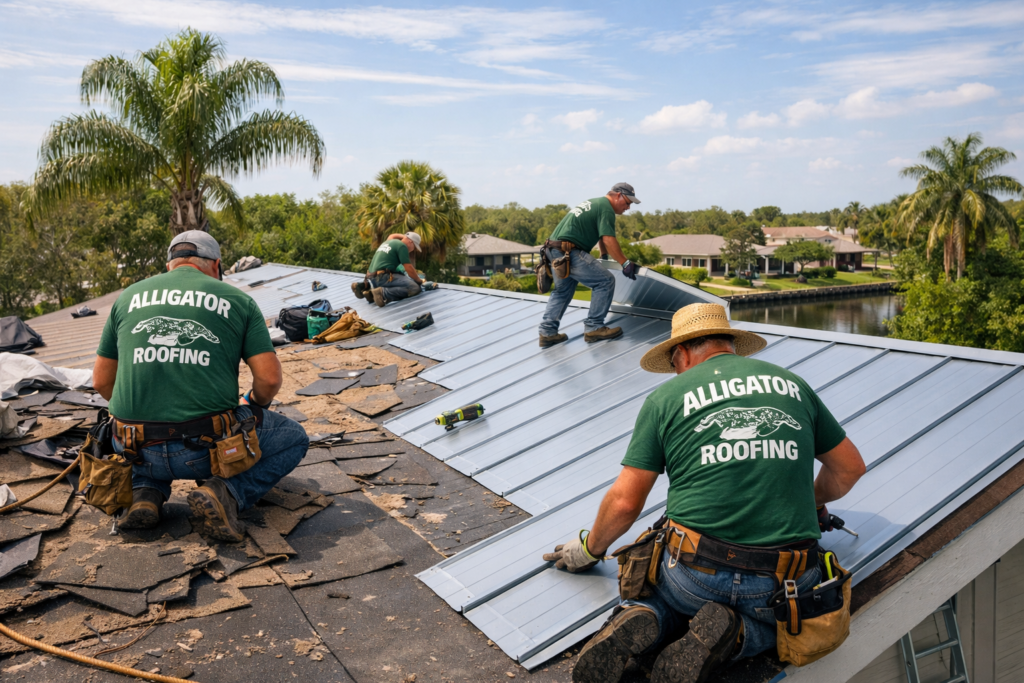
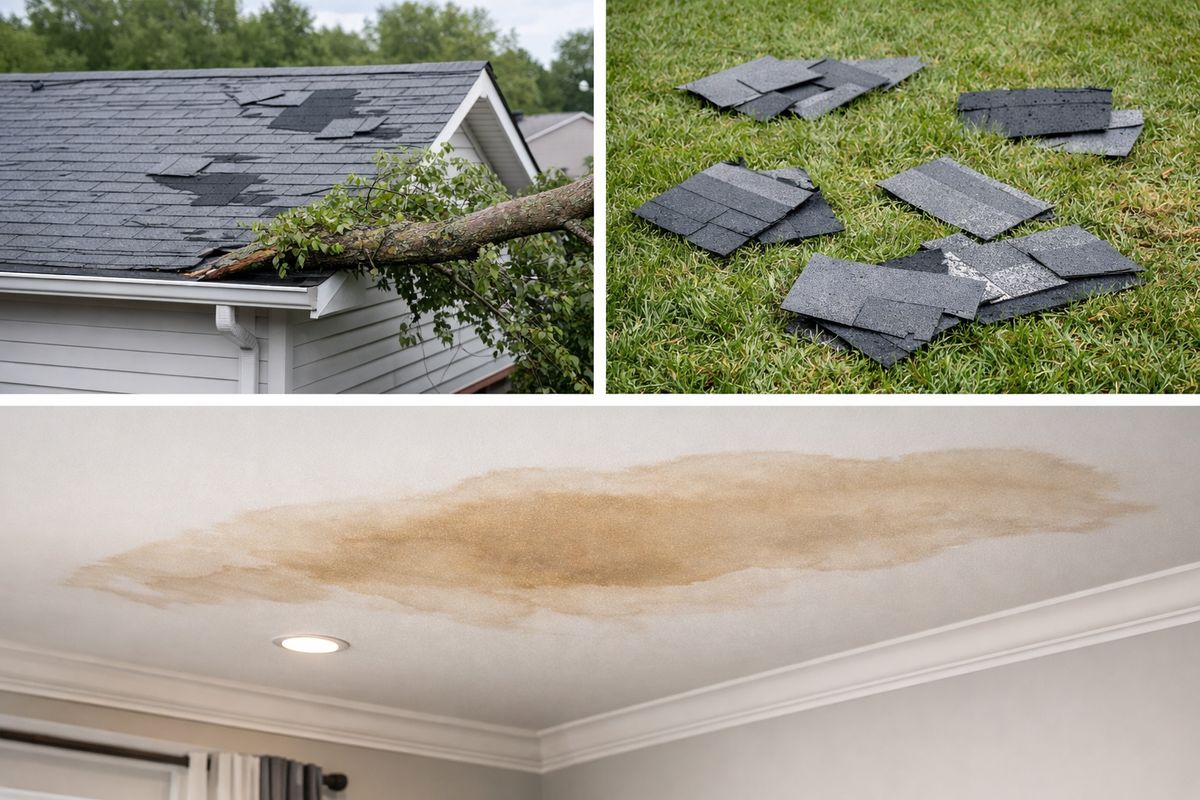
A hard summer storm can roll through Bradenton at 3 a.m., and by breakfast you’re staring at shingles in the yard or a brown ceiling stain that definitely wasn’t there yesterday. Storm damage roof replacement gets confusing fast, mostly because the roof may look bad, but insurance usually cares more about what caused the damage than how ugly it looks now.
What Counts as Storm Damage Roof Replacement in the First Place
Storm damage roof replacement usually means replacing a roof because a specific weather event damaged it badly enough that repair is no longer the smart fix. That is very different from replacing a roof that has simply reached the end of its life. In Manatee County, that distinction matters a lot, especially after a windy afternoon storm, a hurricane band, or a fallen oak limb.
Insurance companies tend to start with one basic question: was this damage caused by a covered event, or was the roof already failing? That sounds simple, but it is where most of the real-world friction starts.
The difference between sudden storm damage and an old roof finally giving out
A covered peril is just insurance language for a sudden event your policy lists, such as wind, hail, lightning, fire, or a tree crashing onto the roof. Standard homeowners coverage often helps with sudden damage from covered perils, but it usually does not pay for age, neglect, or slow deterioration.
So if a storm lifted shingles off a roof that was otherwise holding up, that may support a claim. If the same roof had been brittle, curling, and leaking for years, the catch is that the insurer may treat the problem as wear and tear instead. Old roofs can still qualify for storm claims, but the storm has to be the reason the roof now needs major work.
Storm signs that can point to repair versus full replacement
A few missing shingles on one slope may lead to a repair. Widespread lifted shingles, granule loss across multiple sections, punctures from debris, broken flashing, repeated leaks, sagging spots, or water showing up in several rooms push the conversation closer to replacement.
Here’s a practical way to think about it: isolated damage often gets patched, broad functional damage usually gets replaced. If multiple slopes are affected, shingles are creased or torn in several areas, or water is getting past the roof deck, a full replacement becomes easier to justify than a cosmetic touch-up.
When Insurance May Help Pay for a New Roof
Insurance may help pay for a new roof when storm damage is tied clearly to a covered event and the cost rises above your deductible. Help is possible, but it is never automatic. Policy language, roof age, prior condition, and the inspection findings all shape the outcome.
Storm damage is a major reason roofs get replaced. In fact, over 22% of residential replacements in 2024 were tied to storm-related damage. That does not mean every claim gets approved, but it does show how common this situation is.
Covered events that are commonly included
Most policies commonly include wind, hail, lightning, fire, and falling branches or trees. Sudden rain-related interior damage may also be covered if the rain got in because a covered event first damaged the roof. Coastal policies can be trickier, though, because wind or hurricane damage may carry separate rules and deductibles.
That matters in this part of Florida. A policy may cover storm damage in general, but wind and named storm language can change what you actually pay out of pocket.
Why roof age and condition change the payout
An older roof is not automatically excluded, but it is often treated less generously. Once a roof gets into the 15 to 20 year range, some policies reduce coverage, apply heavier depreciation, or scrutinize maintenance records much more closely. If the insurer sees long-term deterioration, that can cut into the payout or sink the claim entirely.
The simple truth is that older roofs have less margin for argument. If your roof was already tired before the storm, you may still get help, but you should expect closer review.
ACV vs. RCV: the claim detail that changes everything
This is the line in your policy that can change your budget overnight. Actual Cash Value, or ACV, pays what your roof was worth right before the storm after depreciation. Replacement Cost Value, or RCV, pays closer to what it costs to replace the roof with similar materials, minus your deductible and any limits.
That difference is huge. Some sources say older roofs under ACV policies can lose 30% to 60% of claim value to depreciation alone. If you are comparing roofing options after a loss, this is also where material choice starts to matter, especially if you are weighing something longer-lasting like a raised-seam metal roof against another shingle system.
What Usually Stops a Roof Claim From Being Approved
Most denied or reduced claims come down to one of three problems: the damage is excluded, the claim is filed too late, or the insurer believes repair is enough.
Exclusions that surprise homeowners
The usual exclusions are not mysterious, but they do catch people off guard. Normal aging, poor maintenance, long-term leaks, rot, mold, pest damage, flood, and earth movement are common examples. If your attic has been dripping slowly for months, that is a very different insurance story than rain entering through shingles blown off in one storm.
That sounds harsh, but it helps to know the rules upfront. You are trying to tie the damage to one clear event, not to years of decline.
The problem with waiting too long to act
Waiting is one of the fastest ways to weaken a claim. Many policies require prompt notice, and some insurers expect reporting within days or a few weeks of discovering the damage. Guidance from multiple industry sources says claims are often filed within 14 to 30 days after discovery.
Delay also gives the insurer room to argue that later water damage came from inaction, not the original storm. A small opening in the roof can turn into soaked insulation, stained drywall, and moldy decking surprisingly fast in Florida humidity.
Why insurers sometimes approve repair, not replacement
Visible storm damage does not automatically mean full replacement. If damage is limited to one area and the rest of the roof is still sound, the insurer may approve repair only. Matching can become an issue, but not every policy pays to replace undamaged sections just because new shingles will look different.
Replacement gets easier to support when damage is widespread, affects multiple slopes, or triggers code requirements. That is especially true when repair would leave you with a roof that still performs poorly.
What to Do Right After a Storm if You Want Insurance to Help
This part matters more than most people realize. Your first 24 to 72 hours can shape the whole claim.
Document everything before cleanup starts
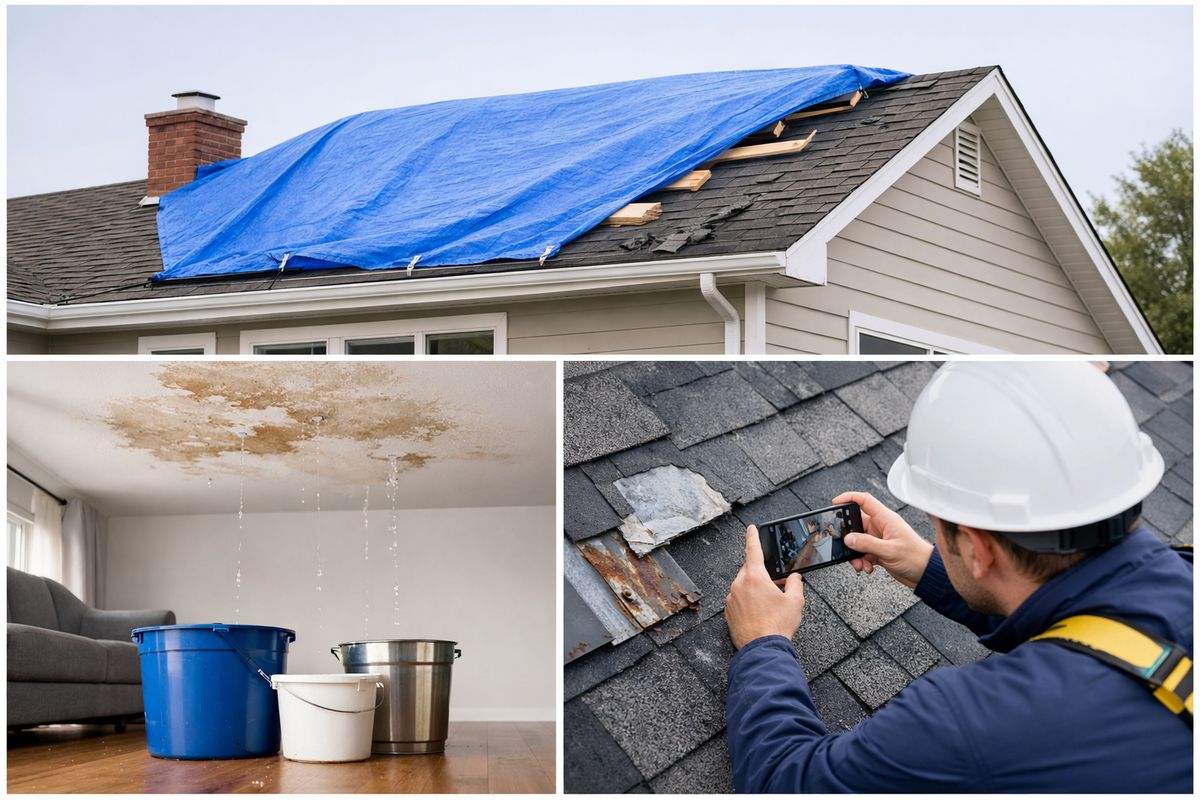
Take date-stamped photos and video before anything gets moved. Capture missing shingles, flashing, gutters, downspouts, pool cage screens, siding, attic moisture, and every interior ceiling stain. If branches fell, photograph those too before cutting them up.
Keep one simple folder with the storm date, weather notes, repair receipts, and any prior maintenance records. Thorough photos and videos from multiple angles can make the claim much easier to explain later.
Make temporary fixes without jumping into full replacement
If the roof is leaking, tarp it. Put buckets under active drips. Move furniture and rugs. Do what you need to do to stop further damage, but do not rush straight into full replacement unless the situation is unsafe.
Save receipts for tarps, emergency labor, and water cleanup. Insurers often expect you to prevent further loss, and those temporary costs may matter when the claim is reviewed.
Get a roofing inspection before or during the adjuster visit
A licensed local roofer can spot storm damage that is easy to miss from the ground, especially lifted tabs, creasing, flashing failure, or subtle punctures. A written estimate, roof diagram, and measurement report make the claim feel less like guesswork and more like a documented scope of loss.
That can save real time. Some claim data suggests measurement reports can cut delays by reducing re-inspections and disputes over size, pitch, and waste.
How to Read Your Policy Without Getting Lost in the Fine Print
You do not need to become an insurance expert. You just need to find the few lines that affect roof money.
Deductibles, including separate wind or hurricane deductibles
A standard deductible is one thing. A wind or hurricane deductible can be something else entirely, and in coastal Florida it is often percentage-based. That means your out-of-pocket cost may be tied to your dwelling coverage amount, not a flat number.
So a claim can sound large and still leave you paying a painful amount before insurance contributes. Always check that line before assuming a claim makes financial sense.
Endorsements and extras that can help
Ordinance or law coverage helps when local code upgrades are required during reroofing. Matching endorsements can help if repairing one section would leave you with a patchwork roof. Extended replacement cost can add breathing room if material and labor prices jump.
That matters because roof costs have climbed. Some industry reporting says repair costs rose nearly 30% since 2020, which means old coverage assumptions can be badly outdated.
Questions to ask before you sign anything
Before signing a contract, check a few plain-English questions. Is your roof covered at ACV or RCV? Is there an age limit or roof schedule? Is matching covered? What is the filing deadline? Is there a separate wind or hurricane deductible? If code upgrades are required, does your policy help pay for them?
Five minutes with those questions can save weeks of back-and-forth later.
Choosing the Right Roofing Contractor for a Storm Claim
After a storm, your door may get more attention than usual. That does not mean every contractor knocking on it is the right fit.
How to avoid storm chasers and rushed promises
Be careful with anyone pushing you to sign on the spot, promising a free roof no matter what, offering to waive your deductible, or handing you vague paperwork. A leaking roof creates urgency, but rushed decisions usually cost more later.
Local track record matters. A contractor familiar with Bradenton and Manatee County permitting, inspection expectations, and storm patterns is usually far more useful than a crew that appeared right after the weather changed.
What a solid local contractor should provide
Look for a valid license, insurance, a written scope of work, clear pricing, photos of the damage, and comfort working through claim documentation. A good contractor should explain what is damaged, what is repairable, and what is not, in plain language.
Local code knowledge matters too. If you are considering replacement materials after a claim, especially something built for longevity and cleaner lines, it helps to understand metal roof options in Bradenton before making the next long-term decision.
When to schedule replacement work
Emergency protection should happen right away. Full replacement usually should not start until the claim scope is approved, unless there is no safe alternative.
Starting too early can create payment disputes if the insurer later says the work exceeded the approved scope. It is like starting a kitchen remodel before the budget is final. You can do it, but you may regret the surprise bill.
Budgeting for the Part Insurance Does Not Cover
Even with an approved claim, zero out-of-pocket is rare. Planning for your share makes the whole process less stressful.
Your deductible, depreciation, and possible code upgrade costs
These are the three buckets that catch most homeowners. First, your deductible. Second, depreciation if you have ACV coverage or recoverable depreciation rules. Third, code upgrade costs if your policy does not include ordinance coverage.
None of those costs are random, even if they feel random in the moment. They usually trace back to policy language you can check before work begins.
When paying out of pocket can make more sense than filing
If damage is minor, your deductible is high, or your roof was already near the end of its life, paying out of pocket can be the cleaner move. Filing a claim for a repair that barely clears the deductible may not be worth the paperwork or future premium concerns.
This is especially true when the storm exposed a roof that already needed replacement soon anyway. In that case, insurance may help less than you hoped, and a planned replacement may give you more control.
A simple next step to take this week
Pull out your policy and find one line: is your roof covered at ACV or RCV? Then, if you noticed missing shingles, leaks, or storm debris on the roof after recent weather, schedule a local inspection this week while the damage is still fresh and easy to document.
Frequently Asked Questions
Will insurance pay for a full roof replacement after a storm?
Sometimes, yes, but only when the damage came from a covered event and is severe enough that repair is not the right fix. The roof’s age, condition, deductible, and policy type all affect the payout.
Can an old roof still qualify for a storm damage claim?
Yes, but older roofs usually face more scrutiny. Depreciation may reduce the payment, and some policies limit coverage once a roof reaches the 15 to 20 year range.
How soon should you file a roof claim after storm damage?
As soon as possible. Quick reporting helps protect your claim, limits extra damage, and makes it easier to connect the loss to the storm event.
Should you replace the roof before the adjuster comes out?
Usually no, unless emergency safety leaves no other option. Temporary protection is smart, but full replacement before approval can complicate scope and payment.
What if the insurer approves repair but your contractor says replacement?
That mismatch happens. Strong documentation, photos, measurements, and a detailed contractor report can support a re-inspection or supplement request.
Does a leaking ceiling always mean insurance will cover the roof?
No. A leak can come from storm damage, but it can also come from age, wear, or long-term maintenance issues. Insurance usually focuses on the cause, not just the stain on the ceiling.