
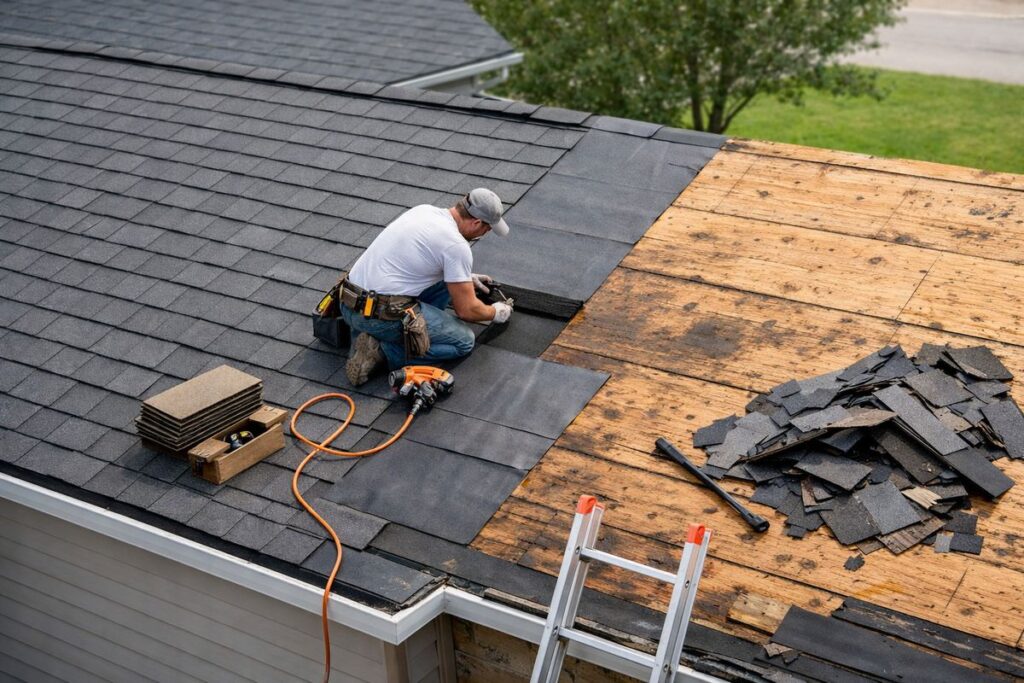
A partial roof replacement can sound like the perfect middle ground after a hard Bradenton afternoon storm: not a tiny patch, not a huge full-roof bill. Here’s the thing, it only makes sense in a fairly narrow set of situations, and knowing the difference can save you from paying for the same problem twice.
When a Partial Roof Replacement Actually Makes Sense
A partial roof replacement means replacing one damaged section of your roof instead of tearing off and rebuilding the whole thing. That can be one slope, one side, or one clearly defined area that took the hit from wind, debris, or a stubborn leak.
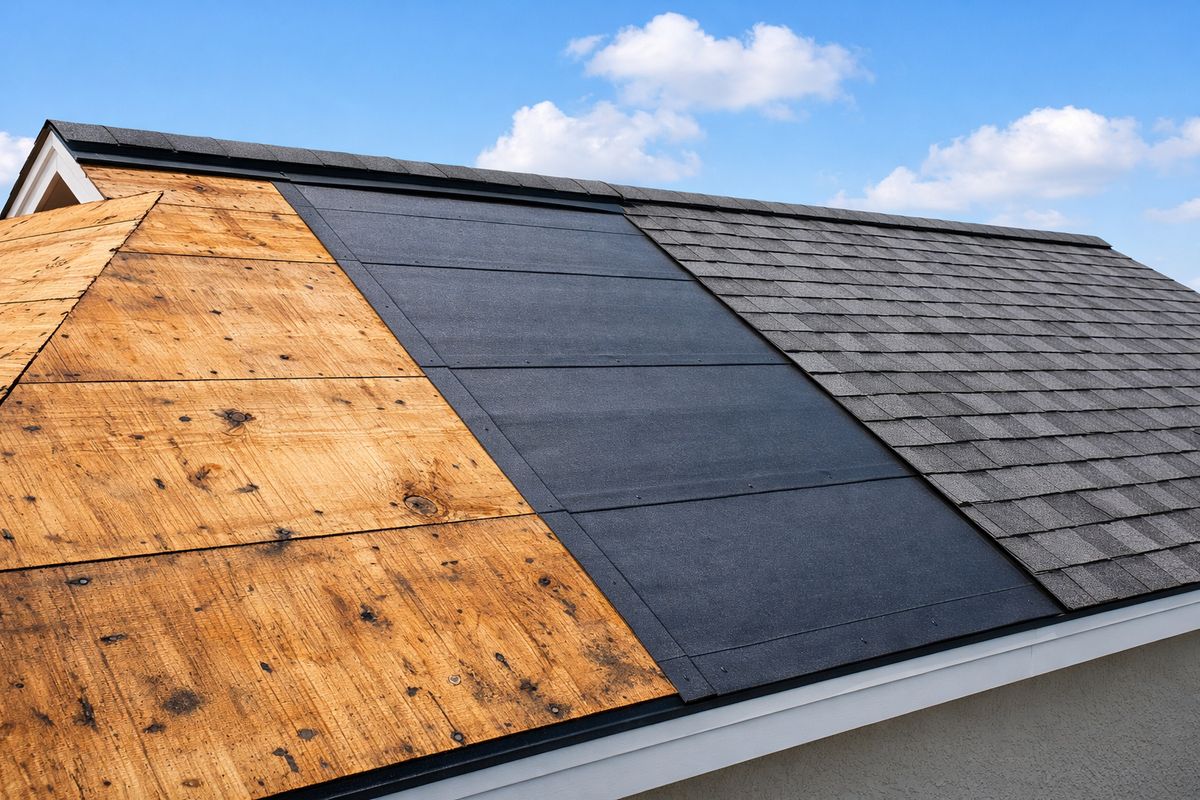
This is not the same as a simple repair. A repair usually fixes a small issue, like a few missing shingles or a flashing problem around a vent. A partial replacement goes deeper. It often includes tearing off shingles in the damaged section, checking the wood deck underneath, replacing underlayment, then installing new roofing materials so that section is rebuilt properly.
What “partial replacement” usually includes
In plain English, your roof is a layered system. The shingles are the visible top layer. Underlayment is the water-shedding layer beneath that. Decking is the wood base everything sits on. A partial replacement usually means some or all of those layers get removed and rebuilt in one area, not just patched over.
That matters because surface damage is not always the whole story. A dark ceiling stain in your Lakewood Ranch living room may trace back to wet underlayment or soft decking higher up the slope.
The 4 Questions That Decide It Fast
If you want a quick way to judge your situation, focus on four things: age, spread of damage, condition of the surrounding roof, and what is happening underneath the shingles. Most partial roof replacement decisions get much easier once those answers are clear.
How old is your roof?
Age is the biggest filter. If your roof is under about 15 years old, a partial replacement has a much better chance of being worth it. If it is over 20 years old, full replacement is usually the smarter move.
Older asphalt shingles get brittle, which makes section work harder than it sounds. Pulling up one area can crack the shingles around it, and that turns a neat small project into a messy larger one. In fact, brittle asphalt roofs are one of the clearest reasons contractors push toward full replacement.
Is the damage truly limited?
Partial replacement makes sense when damage is clearly localized and affects less than about 30% of the roof. Think one slope hit by wind, one section damaged by a branch, or one leak tied to one area.
The catch is that “small” damage on the ceiling does not always mean small damage on the roof. But if the trouble is genuinely contained, localized damage is exactly where partial replacement can shine.
Is the rest of the roof still in good shape?
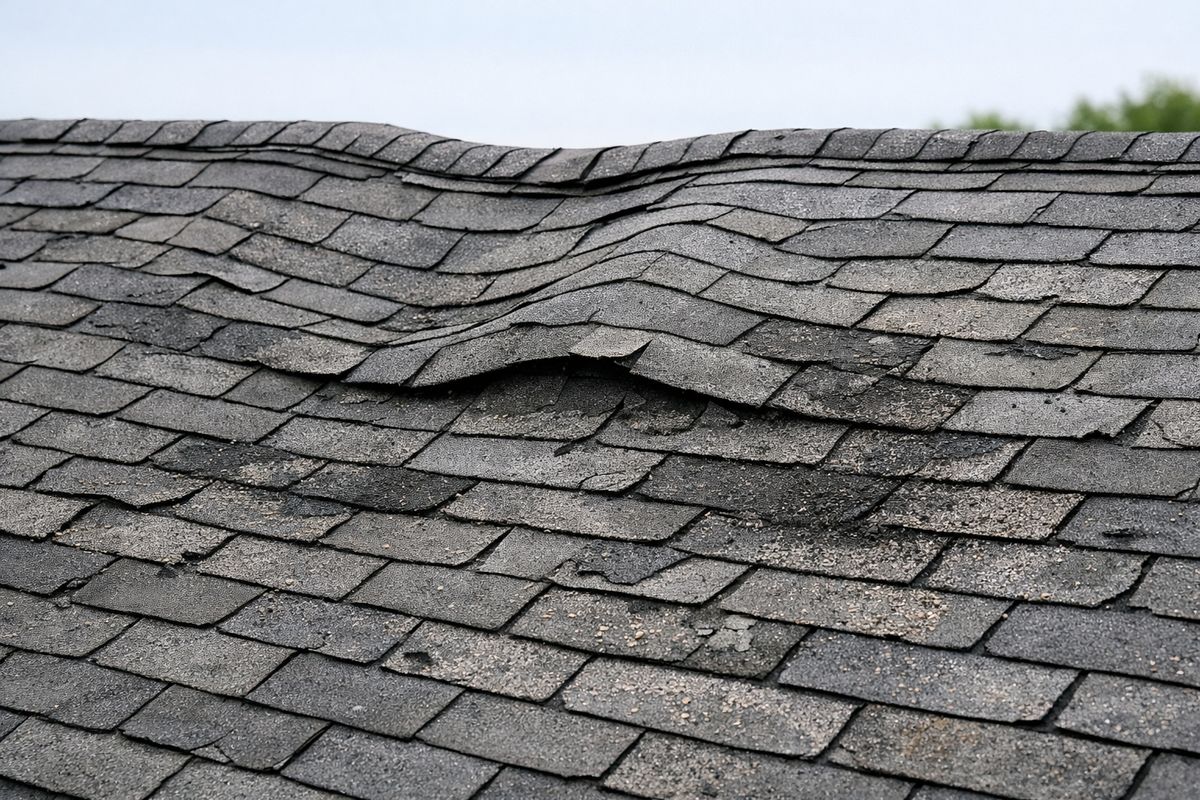
The surrounding roof has to be healthy enough to support the fix. That means shingles still have some flexibility, granule loss is not widespread, and you are not seeing curling, cracking, sagging, or soft spots across multiple areas.
If the rest of the roof already looks tired, a partial replacement starts to feel like painting one wall in a room with water damage everywhere else. It may look better for a moment, but it will not solve the bigger issue.
Are hidden layers still sound?
Visible shingles are only part of the decision. If the decking or underlayment is wet or rotted beyond the damaged section, the project can expand fast.
That is why a real inspection matters more than a quick glance from the driveway. Checking the underlayment and nearby decking can be the difference between a smart targeted job and a partial fix that fails early.
Situations Where Partial Replacement Is a Smart Buy
There are a few cases where a partial roof replacement is a solid, practical purchase, not a compromise.
Storm damage in one area
This is the most common one in Manatee County. Wind lifts shingles on one side. Debris punches into one section. Rain gets into one exposed area while the rest of the roof stays sound.
If the damage is limited and the roof still has years left, replacing just that section can restore protection without forcing you into a full reroof before you need one.
A newer roof with one failing section
Sometimes one area fails early because of flashing issues, poor attic ventilation, or one bad installation detail. If the rest of the roof is performing normally, fixing that section can be reasonable.
This is also where material choice starts to matter. If you are already looking ahead to a future upgrade, it helps to understand how this metal roof style works before you commit to another short-term patch cycle.
Insurance claims with clearly defined damage
Insurance may only approve work on the damaged slope or section, especially when the loss is tied to one storm event. Documentation matters here. Photos, inspection notes, and a clear scope can make the difference between a vague repair allowance and a defined replacement area.
Normal wear is a different story. Insurance usually pays for covered damage, not age alone.
When a Full Replacement Is the Better Move
Sometimes the cheaper-looking option is the expensive mistake. This is one of those times.
Your roof is already near the end of its life
If your roof is pushing past 20 years, a full replacement usually gives better value. Replacing one section on an old roof is like swapping one worn tire while the other three are nearly bald. You have still got the same bigger problem, just dressed up in one corner.
You have multiple leaks or widespread shingle damage
More than one leak is a major warning sign. So is broad curling, cracking, missing granules, repeated repairs, or visible wear on several slopes.
A good rule of thumb: if the repair bill is getting close to 50% of replacement cost, stop patching and start planning for full replacement.
Decking, moisture, or structural issues show up
Once rot, trapped moisture, or sagging enters the picture, partial replacement often stops being a clean fix. Hidden damage tends to spread farther than the stain suggests.
If your roof is heading toward full replacement anyway, it may also be worth comparing longer-life systems like metal roofing options in Bradenton or learning more about raised-seam metal systems.
Cost, Savings, and the Tradeoff Nobody Loves
A partial replacement usually costs less upfront, but not always less over time.
Typical partial replacement cost ranges
For a small section, expect roughly $1,000 to $3,500. For one side or about half the roof, expect roughly $4,000 to $9,000. Labor, tear-off, disposal, permits, roof pitch, and material type can all move that number.
Even on a smaller job, you still pay for setup and logistics. Permits and removal do not disappear just because only part of the roof is being replaced.
Why full replacement can cost less in the long run
Nationally, full replacement often lands around $9,000 and up, with many jobs falling in the mid-thousands to low five figures. That is a big jump, no question.
But if another section fails a year later, you can end up paying for labor, delivery, cleanup, and disruption twice. That is the tradeoff nobody loves.
What affects the final price in Bradenton-area jobs
Local storm demand can push scheduling and pricing. Steep roofs cost more. Matching older shingles can take extra effort. Specialty materials like tile or metal often need a contractor with the right experience, which also affects price.
The Downsides to Know Before You Say Yes
Partial replacement has real drawbacks, and you should know them before signing anything.
New shingles may not match the old roof
Even if the brand and color are technically the same, years of Florida sun can make the old roof fade. The new section may look darker and cleaner right away.
If the replaced area faces the street, curb appeal can take a hit. Honestly, this is one of the biggest reasons homeowners end up disappointed after an otherwise solid repair.
Warranty coverage can get tricky
A partial replacement may come with a workmanship warranty on the new section, but it does not reset the age of the rest of your roof. Manufacturer coverage may also be more limited depending on the scope and materials used.
Partial replacement can hide a bigger problem
A leak is sometimes a symptom, not the cause. Poor ventilation, failing flashing, or nearby moisture damage can sit just outside the obvious trouble spot. If the inspection is rushed, you can fix the visible issue and miss the one that actually matters.
How to Choose the Right Roofing Contractor for a Partial Replacement
Choosing the job is one thing. Choosing the contractor is the part that shapes the outcome.
Ask for an inspection of more than the damaged spot
Look for someone who checks shingles, flashing, decking, underlayment, and nearby slopes, not just the leak stain or missing shingles you already noticed. That is how you avoid under-scoped estimates.
Get a clear scope, photos, and pricing
You want a written estimate that explains what is being replaced, what happens if damaged decking is found, whether permits are included, and how material matching will be handled. Homeowners consistently respond to transparent pricing, and for good reason.
Check reviews, response time, and local experience
In roofing, trust signals matter. Google reviews matter. Word of mouth matters. Fast communication matters. If a contractor knows Bradenton and Manatee County storm patterns, insurance paperwork, and local permit expectations, that helps.
A Simple Repair-or-Replace Rule You Can Use This Week
If your damage is isolated, your roof is under about 15 years old, and the surrounding roof system is still solid, a partial roof replacement can be a smart move. If your roof is older, leaking in multiple spots, or hiding deeper moisture or decking problems, full replacement is usually the better investment.
Try one thing this week: schedule one roof inspection and ask for side-by-side pricing for a partial replacement versus a full replacement. Seeing both scopes on paper makes the right decision a lot easier.
Frequently Asked Questions
Is a partial roof replacement cheaper than a full replacement?
Usually, yes upfront. But the price gap can shrink if tear-off, permits, steep pitch, or hidden decking damage are involved. If another section fails soon after, the long-term cost can be higher.
Can a partial roof replacement match the rest of the roof?
Sometimes, but not perfectly. Sun fading and weathering often make the new section stand out, even when the shingle brand and color are the same.
Will insurance pay for only part of the roof?
Often, yes. If the damage is limited to one area from a covered event, insurance may approve only that section or slope instead of the whole roof.
How do you know if hidden roof damage is present?
A proper inspection should include shingles, flashing, underlayment, and decking in and around the damaged area. Soft spots, moisture, stains, and sagging are common warning signs.
When should you skip partial replacement and replace the whole roof?
If your roof is over 20 years old, has multiple leaks, shows broad curling or cracking, or has rot or moisture damage underneath, full replacement is usually the better call.