A roof problem rarely shows up at a convenient time. You notice a ceiling stain after one of those hard Bradenton afternoon storms, grab a bucket, and suddenly the whole roof repair vs replacement question feels expensive, urgent, and weirdly hard to sort out.
Repair or Replace? Start With the Fast Gut Check
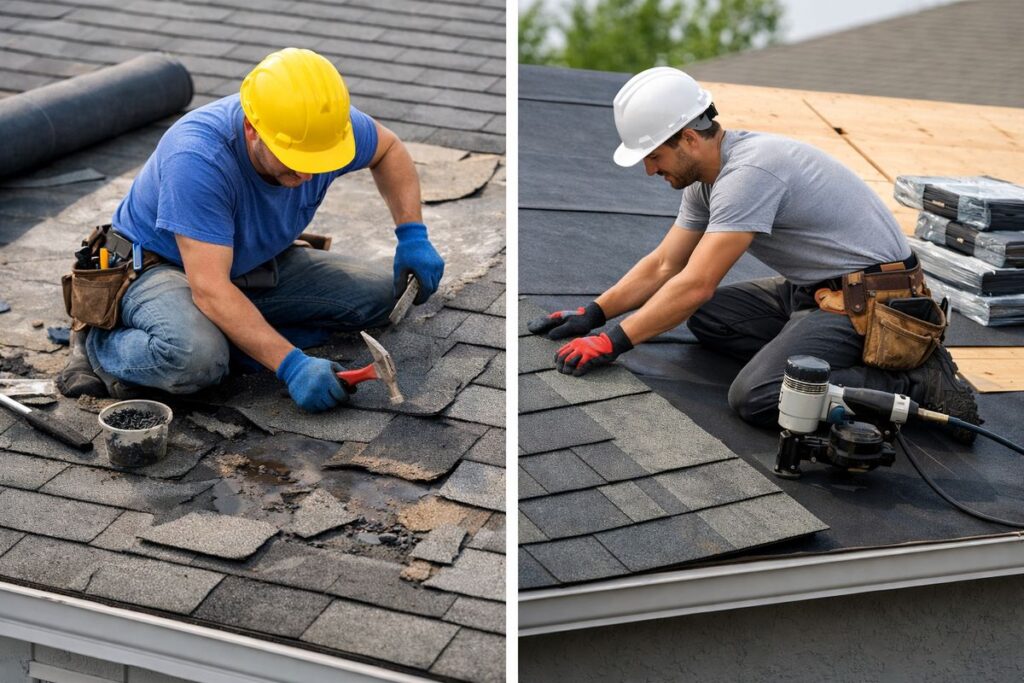
Here’s the quick version: repair usually makes sense when your roof is still fairly young, the damage is limited, and you are not dealing with the same issue again and again. Replacement usually makes sense when the roof is older, damage is spread out, moisture has gotten deeper into the system, or patching has turned into a routine.
That is the real dividing line. Not fear. Not sales pressure. Condition.
The Short Answer in Plain English
Most roof decisions come down to five things: age, damage spread, structural condition, repair history, and insurance coverage. If your roof is under about 15 years old and the problem is isolated, a repair is often the smart move. If your roof is older, the damage touches a big section, or the same leak keeps coming back, replacement is usually the better use of your money.
When a Roof Repair Usually Makes Sense
Not every leak means your whole roof is done. In fact, a lot of roofs can be fixed cleanly and affordably if the problem is caught early and the rest of the system is still solid.
Your Roof Is Still Fairly Young
A roof under 15 years old is often a good repair candidate, especially if the surrounding materials still look healthy and you are not seeing signs of widespread wear. That is especially true with localized shingle loss, minor flashing trouble, or damage from one recent storm event.
Material matters too. Asphalt shingles tend to age faster, often in the 15 to 30 year range depending on quality and Florida conditions. Metal can last 40 to 70 years, and tile can last much longer. If you are comparing materials while thinking ahead, it helps to look at how concealed-fastener metal systems perform in Florida weather.
The Damage Is Small and Limited to One Area
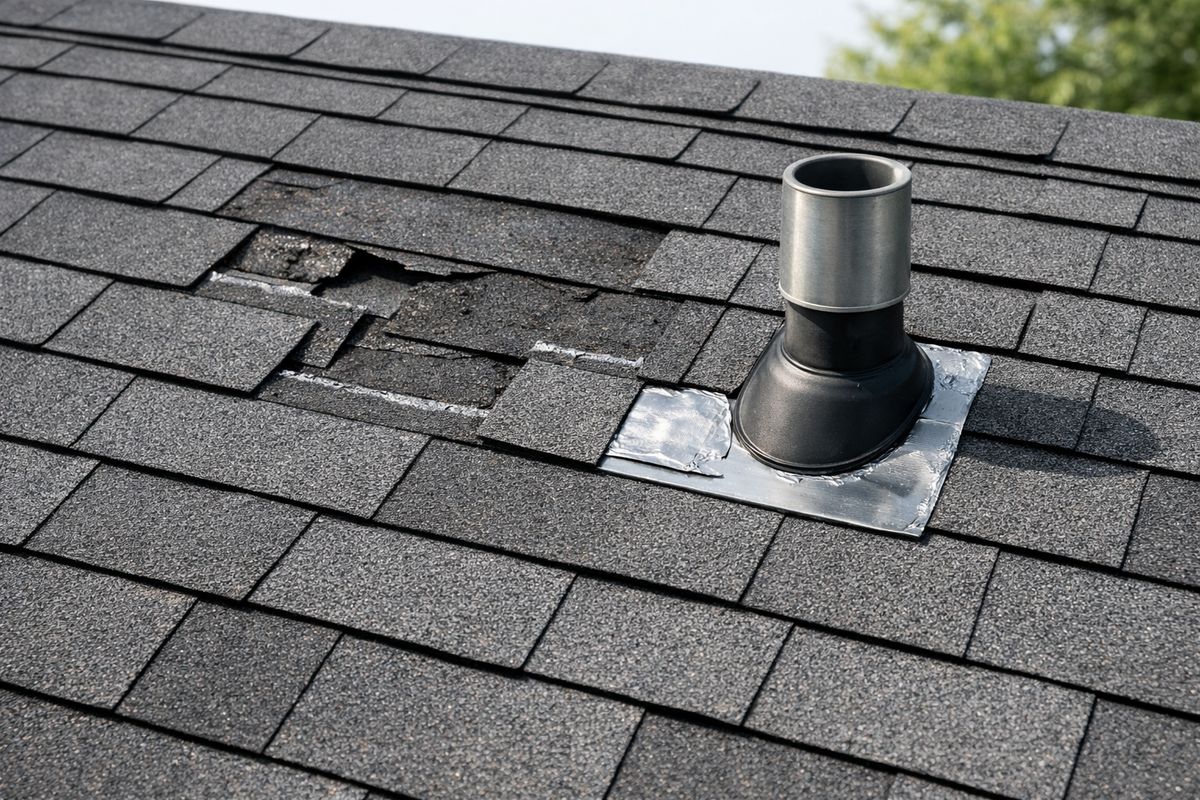
A few missing shingles. One leak around a vent. A failed pipe boot, which is the rubber collar that seals around a plumbing pipe. A small section hit by wind or a branch. Those are classic repair situations.
A lot of guidance lines up around the same threshold: if the damage covers less than about 25% of the roof, repair is often the better choice. That does not mean you should guess from the ground, though honestly, that is how a lot of bad decisions start.
You Have Not Been Chasing the Same Problem Over and Over
If this is your first repair in years, a targeted fix may buy you plenty of useful life. But if roof issues have become a repeating calendar event, the picture changes.
A good rule of thumb is simple: if you have needed three or more repairs in five years, you are probably dealing with a bigger roof problem, not just bad luck.
When Roof Replacement Is the Smarter Call
Sometimes replacement feels like the expensive option, but it is actually the cheaper choice over time. Paying less today only to pay again next storm season is not saving money. It is just delaying the full bill.
Your Roof Is Near the End of Its Expected Life
Age is not everything, but it is one of the strongest clues. Asphalt shingles usually last about 15 to 30 years. Metal often runs 40 to 70. Tile can go 40, 50, or much more, depending on the material and the components underneath it.
Florida shortens those timelines. Sun, wind, salt air, and repeated storm exposure wear roofs down faster than the brochure version of roof life. Once a roof is around 15 years old or older, temporary repairs start making less sense if visible wear is already showing up.
Damage Covers a Big Part of the Roof
Once damage spreads across roughly 25% to 30% of the roof area or slope, patching gets messy fast. The labor adds up. Weak spots remain nearby. Matching becomes harder. And the roof starts behaving less like one complete system and more like a quilt of old and new parts.
That is usually the point where replacement becomes the cleaner, more durable answer.
You’re Seeing Structural or Moisture Problems
Sagging roof lines are a red flag. Soft decking is another. Decking is the wooden surface under your roofing material, the layer shingles or metal attach to. Flashing is the metal used to seal transitions around chimneys, walls, vents, and valleys.
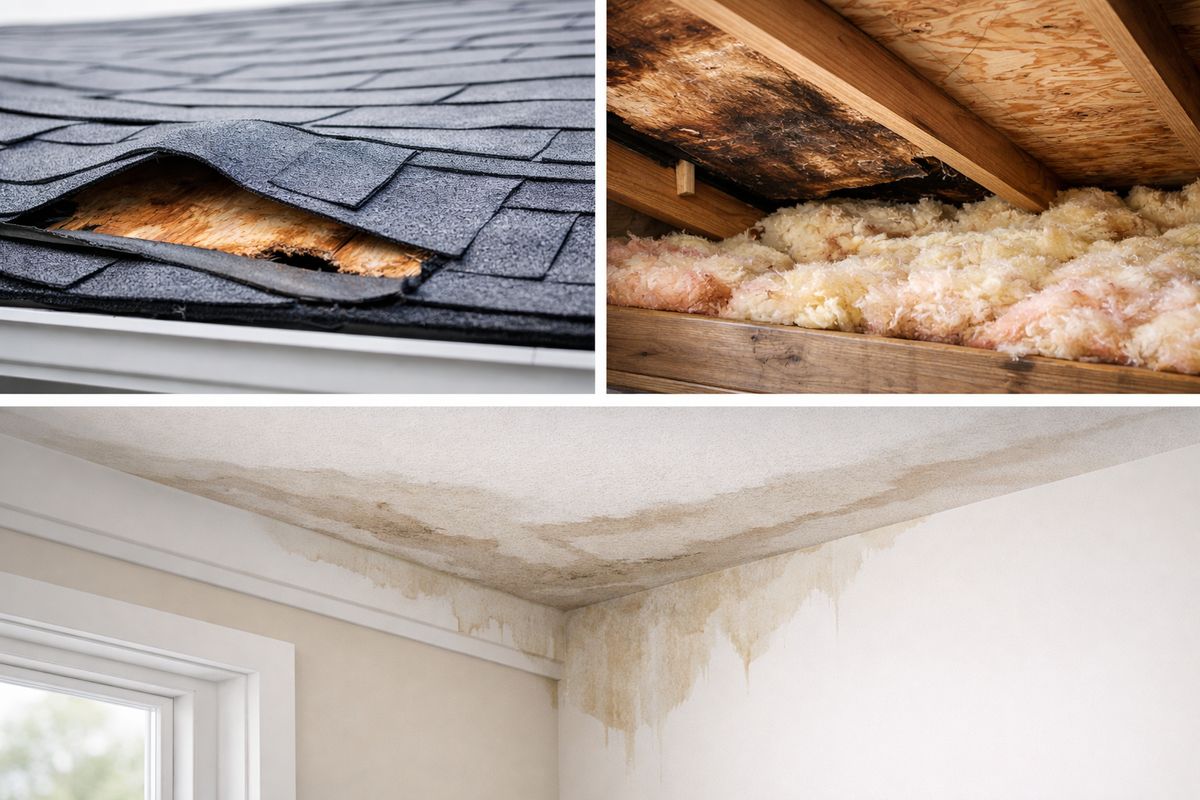
If you are seeing attic moisture, mold, rotted wood, recurring leaks, or water stains spreading across ceilings and walls, the problem has likely moved past a simple surface patch. A sagging roof deck or ongoing moisture intrusion usually points toward replacement, plus repairs to damaged underlying materials.
Matching Materials Is a Problem
This part gets overlooked until the estimate shows up. Older shingles and tiles may be discontinued. Even if the product still exists, years of sun fade can make a repair patch stand out like a square of new sod in an old lawn.
That is not just about looks. Mismatched materials can create uneven wear and leave vulnerable edges beside older sections. If clean matching is not realistic, replacement often makes more sense than forcing a patch that never blends or performs quite right.
The Real Math: Cost, Value, and the 30% Rule
It is easy to fixate on the smaller number. That is normal. But a roof decision is not just about the next invoice. It is about what you will spend after that, and what damage you might invite by waiting.
Typical Repair Costs vs. Replacement Costs
In 2026, most residential roof repairs fall somewhere between $600 and $6,000, with many common fixes landing well below the top end. Replacing a few shingles might cost $150 to $1,200. Flashing repair can run $200 to $2,500. Minor leak repair often falls between $300 and $2,000. Pipe boot replacement is usually on the lower side.
A full replacement is a much bigger project. Many homeowners spend roughly $9,500 to $28,000, and premium materials can climb well beyond that. Asphalt is usually the most budget-friendly replacement path. Metal and tile cost more upfront, though long-term value can be better depending on how long you plan to stay and how much storm resilience matters. If you are looking into local options, this page on metal roofing in Bradenton gives a useful starting point.
Use the 30% Rule Before You Spend More
Here’s the trick: compare the repair estimate to the likely replacement cost. If the repair is more than about 30% of the cost of a new roof, replacement is often the better investment.
The 30% rule is not a law. It is a filter. But it is a good one, because once repairs get that expensive, you are paying a lot for a roof that may still be old, mismatched, or one storm away from another invoice.
Think Beyond This One Invoice
A patch can solve today’s leak and still be the wrong financial move. Repeated service calls, interior drywall damage, soaked insulation, mold cleanup, and higher cooling costs from compromised roof performance add up fast.
There is also the resale side. A new roof may recoup around 60% to 70% of its cost and can make your home easier to sell, especially when buyers are already nervous about insurance and storm exposure in Manatee County.
Florida and Manatee County Factors That Change the Decision
A roof in Bradenton is not aging in a calm, dry lab. It is dealing with heavy rain, strong wind, salt air, heat, and hurricane season. That changes the math.
Storm, Wind, and Hurricane Exposure
After a strong storm, visible damage is only part of the story. A roof can lose a few shingles and still have broader lifting, loosened flashing, bruising, or moisture intrusion that is hard to see from the yard.
That is why one small leak after a storm can turn out to be a larger system problem. In this part of Florida, storm damage deserves a real inspection, not just a glance and a tarp.
Insurance Can Flip the Math Fast
Insurance changes everything when damage is tied to a covered event like wind, debris impact, hail, hurricane damage, or storm-related leaks. Age and ordinary wear usually are not covered, but storm damage often is.
Your deductible may be anywhere from $500 to $2,500 on some policies, though windstorm deductibles can be higher. The other big factor is policy type. Replacement Cost Value pays to replace with similar materials minus the deductible. Actual Cash Value pays the depreciated value, which can leave you covering a much bigger gap. Documentation matters, and timing matters even more if you want the damage tied clearly to a recent event.
Building Codes and Upgrades
The catch is that bigger repairs and full replacements can trigger code-related updates. That might include underlayment changes, fastening patterns, or other storm-readiness requirements needed to meet current standards.
That can raise the price, but it can also make the roof stronger and more insurable going forward. In other words, code upgrades are not fluff. They are part of why an older roof sometimes stops being a good patch candidate.
A Simple Checklist to Help You Decide
If you want a practical way to sort this out before approving anything, use a short decision framework. It works better than trying to decode ten competing opinions.
The 4-of-5 Decision Test
Look at these five factors: roof age, damage scope, material matching, insurance involvement, and how long you plan to stay in the home. If four out of five point in the same direction, your answer is usually clear.
If your roof is younger, damage is limited, matching is easy, insurance is not involved, and you only need more life from the roof for a few years, repair usually wins. If the roof is older, damage is spread out, matching is poor, insurance may cover storm loss, and you plan to stay put, replacement usually makes more sense.
Questions to Ask Before You Approve Any Work
Ask how much of the roof is actually damaged. Ask whether the decking is sound. Ask whether the repaired area will truly match. Ask how many realistic years are left in the rest of the roof, not just the patched spot. Ask whether insurance may cover any of it. And ask the simplest question of all: what gets worse if you wait six months?
Those answers tend to clear the fog quickly.
Common Mistakes That Get Expensive Fast
Most costly roof decisions are not caused by one dramatic mistake. They come from small, understandable missteps that snowball.
Choosing Based Only on the Lowest Price
The cheapest quote can hide the most expensive outcome. A low number may mean a thinner scope, lower-grade materials, missed flashing issues, or no attention to wet decking underneath.
Compare what is included, not just the final total. A repair that ignores the real source of water is not a bargain. It is a callback waiting to happen.
Waiting Until a Small Leak Becomes Interior Damage
A slow roof leak is like a slow tire leak. Ignore it long enough and the whole drive goes sideways.
What starts as a manageable roof fix can turn into stained ceilings, damaged insulation, swollen drywall, mold, and rotten wood. Water is patient. That is the problem.
Skipping the Inspection After a Storm
Missing shingles are obvious. Hidden lifting, flashing damage, punctures, and moisture intrusion are not. After a major storm rolls through Manatee County, skipping an inspection can leave you deciding based on incomplete information.
And incomplete information is how roofs get repaired when they should have been replaced, or replaced when a targeted fix would have done the job.
What to Expect From a Professional Roof Inspection
A good inspection should make the decision clearer, not murkier. If it feels vague, rushed, or strangely one-sided, that is a warning sign.
What Should Be Checked
The inspection should cover exterior roofing materials, flashing, penetrations, valleys, visible decking condition, attic moisture, ventilation, and interior water marks. Penetrations are simply roof openings like vents, pipes, and other elements that pass through the roof surface.
The goal is to understand the whole system, not just the spot where the leak showed up. That includes surface wear, hidden moisture, previous repairs, and signs the roof may be nearing the end of its useful life.
What a Good Estimate Should Spell Out
A solid estimate should clearly separate repair and replacement options when both are possible. It should list materials, warranty details, code-related items, timeline, cleanup, and whether temporary protection is included.
You should be able to read it and know what you are paying for. No mystery line items. No fuzzy language. Just a clear scope you can compare against other written estimates.
The Best Next Step for Your Roof This Week
If your roof has started giving you reasons to worry, try one simple thing this week: schedule an inspection, take dated photos of any ceiling stains or leak spots, and pull your insurance paperwork into one folder before the next storm rolls across Manatee County. A clear decision gets much easier once you are working from facts instead of guesses.
Frequently Asked Questions
Is it better to repair or replace a leaking roof?
If the leak comes from one small, isolated problem on a younger roof, repair is often enough. If leaks are recurring, showing up in multiple areas, or tied to an older roof with broader wear, replacement is usually the smarter move.
How old is too old for a roof repair?
There is no magic birthday, but around 15 years is where repairs start making less sense on many asphalt roofs, especially in Florida. Past that point, age plus visible wear often points toward replacement instead of another patch.
Will homeowners insurance pay for roof replacement?
Insurance often covers replacement when damage comes from a covered storm event, such as wind, debris, hail, or hurricane damage. It usually does not cover old age, neglect, or normal wear and tear.
How much damage is too much for a repair?
Once damage reaches roughly 25% to 30% of a roof area or slope, replacement often becomes the better choice. At that point, patching scattered sections can cost a lot without giving you a dependable long-term result.
Can you repair just one section of a roof?
Yes, sometimes. That works best when the damage is limited and matching materials are still available. The catch is that partial repairs on older roofs can leave visible mismatches and weak transition areas beside worn materials.
How fast should you act after storm damage?
As fast as you reasonably can. Take photos, stop active water intrusion if needed, and schedule an inspection quickly. Waiting can make insurance claims harder and can let hidden moisture turn into drywall, insulation, or mold problems.